🇮🇹
Flights and Hotels in Lake Como
Framed by the Alps, Lake Como is a pearl of historic villas, lush gardens and lakeside villages.
Framed by the Alps, Lake Como is a pearl of historic villas, lush gardens and lakeside villages.
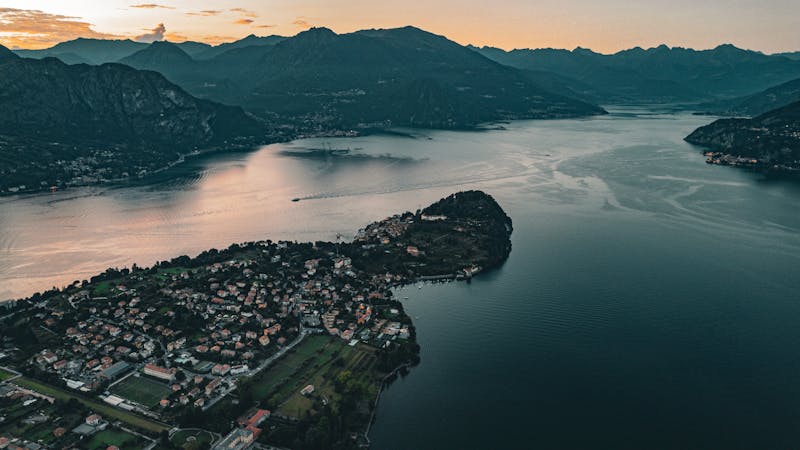
Lake Como has been a retreat for aristocrats, writers and celebrities for centuries: historic villas with Italian gardens, pastel-coloured villages and mountains mirrored in the water form a landscape with few equals in Europe. The lake is shaped like an inverted Y: its three branches (Como, Lecco and Colico) meet in the middle, where Bellagio, Varenna and Menaggio cluster together — the golden triangle of lake tourism. The Navigazione ferries link the shores and remain the most practical and scenic way to get around. Allow at least two full days for the mid-lake area, and a week if you want to add hikes, more villas and the quieter upper lake.
The provincial capital was Roman in origin: Julius Caesar refounded Novum Comum in 59 BC, and Pliny the Elder was born here, while Pliny the Younger described his two lakeside villas in his letters. In the Middle Ages Como fought the Ten Years' War against Milan (1118-1127), was destroyed and rose again with Barbarossa's support. From the sixteenth century the city became Europe's silk capital, a primacy it still holds. Alessandro Volta, inventor of the electric battery, was born here in 1745 and is celebrated by the Tempio Voltiano on the lakefront. Between the eighteenth and nineteenth centuries the Lombard and European aristocracy built the great villas: Villa Carlotta in Tremezzo, Villa Melzi in Bellagio and Villa del Balbianello in Lenno, last home of the explorer Guido Monzino, who left it to the FAI heritage fund. Alessandro Manzoni opened The Betrothed on «that branch of Lake Como» — the Lecco branch. In April 1945 the fleeing Mussolini was captured at Dongo, on the upper lake. Today the lake is once again an international film set, from Star Wars to James Bond.
From April to October. May and September offer the best weather without the crowds: 18-25°C, gardens in bloom or golden autumn light, and ferries already running a full service. June is excellent but pricier; July and August bring 28-32°C, humidity, heavy traffic on the Strada Regina and peak prices — though the lake tempers the heat better than the cities do. April is changeable, but Villa Carlotta's azaleas flower between late April and May. October brings scenic mists and falling rates, with the villas open until early November. From November to March many villas, hotels and village restaurants close and ferry timetables shrink: what remains is the quiet charm of Como town and Brunate.
Villa del Balbianello (Lenno) — the lake's most scenic villa, on a wooded promontory; a FAI heritage property and film set for Star Wars and 007's Casino Royale; garden around €12, interiors by guided tour, online booking advisable. Villa Carlotta (Tremezzo) — 8 hectares of botanical garden famous for spring azaleas and sculptures of the Canova school; entry around €15. Villa Melzi (Bellagio) — English-style gardens along the waterfront, around €10. Villa Monastero (Varenna) — a former monastery with a 2 km garden over the water. Como Cathedral — Gothic-Renaissance, free entry. Como-Brunate funicular — running since 1894, it climbs in 7 minutes to a panoramic balcony; around €4 each way. Vezio Castle — a fortress above Varenna with falconry displays. Bellano Gorge (Orrido di Bellano) — a ravine with suspended walkways, around €6. Comacina Island — the lake's only island, with early Christian ruins. Piona Abbey — a Cluniac priory on the upper lake, with a cloister and liqueurs made by the monks.
1 day: morning train from Milan to Varenna, boat to Bellagio (Villa Melzi gardens and the lanes), ferry across to Menaggio or straight to Tremezzo for Villa Carlotta, then boat back to Varenna: the classic mid-lake triangle. 2-3 days: add Villa del Balbianello from Lenno, half a day in Como (Cathedral, lakefront, funicular up to Brunate at sunset) and the Lake Como Greenway, an easy 10 km from Colonno to Cadenabbia among olive groves and villages. 5+ days: the Bellano Gorge and Vezio Castle, Piona Abbey, the upper-lake beaches, the drive or bike climb to the Madonna del Ghisallo, the Manzonian Lecco branch and a side trip to Lugano, in Switzerland, half an hour from Menaggio.
Lake and mountain cooking. Lake fish: risotto with perch fillets is the signature dish, followed by grilled whitefish (lavarello), shad and missoltini — sun-dried shad served with toasted polenta, intense in flavour and worth trying. From the Valtellina, just behind the lake: buckwheat pizzoccheri, polenta taragna and bresaola. In the mountains of the Larian Triangle they make toc, a polenta with butter and cheese, and alpine cheeses are everywhere; the Tremezzina grows Italy's northernmost olive trees, yielding a delicate oil. Desserts: miascia, a bread cake with fruit. Wines: Valtellina reds from nebbiolo grapes (Sassella, Inferno) and Terre Lariane IGT. Don't miss a gelato while strolling Bellagio's lakefront. Typical prices: pizzoccheri around €12-14, perch risotto €14-18, fish dinner €35-55. Avoid the laminated tourist menus on the busiest promenades.
Bellagio, the pearl of the lake, at the centre of the triangle between the two branches: stepped lanes, historic hotels, high prices. Varenna, on the Lecco shore, for authentic charm and a handy train from Milan. Menaggio for lakefront walks and hikes. Tremezzina for Villa Carlotta and Villa del Balbianello, with the Greenway running through it. Como town for the Cathedral, the museums and the Brunate funicular: a practical, cheaper base. Elegant Cernobbio, home to Villa d'Este and Villa Erba. The upper lake (Domaso, Gravedona) for wind, windsurfing and gentler campsite prices. The Lecco branch, Manzoni country and far less touristy.
May: the Concorso d'Eleganza Villa d'Este in Cernobbio, the world's most prestigious vintage-car gathering. Late June: the Sagra di San Giovanni at Comacina Island, with one of northern Italy's biggest firework displays and costumed re-enactments. Summer: the Bellagio and Lake Como Festival (classical music in the villas) and the Lake Como Film Festival with open-air screenings. Mid-August: Ferragosto fireworks in many lakeside villages. September: the Palio del Baradello in Como, a medieval pageant tied to Barbarossa, with processions and contests between the districts. October: the Giro di Lombardia, cycling's «classic of the falling leaves», climbs to the Madonna del Ghisallo. December: Christmas markets and light projections in Como and the villages.
The lake has no airport of its own: you fly into Milan. Malpensa (MXP) is the intercontinental hub, about 50 km from Como: ITA Airways, easyJet and the major European carriers; from Rome about 1h10 of flight (€40-120), from Naples 1h20, from Catania and Palermo 1h40-1h50 (€40-150). Linate (LIN), Milan's city airport, is convenient if you continue by train from Milano Centrale. Bergamo Orio al Serio (BGY) is the low-cost base for Ryanair and Wizz Air, about 80 km from the Lecco branch. From the airports you continue by train or car: regional trains from Milano Centrale reach Como San Giovanni in 35-40 minutes and Varenna-Esino in about an hour.
The lake's signature transport is the fleet of Navigazione Lago di Como boats: slow scenic lines, fast hydrofoils and the car-and-passenger ferry linking Bellagio, Varenna, Menaggio and Cadenabbia; single fares from about €5, mid-lake day pass around €15-25. There are two railway lines: on the west shore, Trenord and EuroCity trains stop at Como San Giovanni (from Milano Centrale, 35-40 minutes, about €5-6); on the east shore the Milan-Lecco-Tirano line serves Varenna-Esino and Colico (about 1 hour, €7). ASF buses fill the gaps: the C10 runs along the western shore from Como to Menaggio and Colico, the C30 links Como and Bellagio. From Malpensa: Malpensa Express to Milan and a connection, or via Saronno towards Como Lago. By car, the Strada Regina is narrow and jammed in summer; parking is scarce in the villages.
Flights to Milan from within Italy €40-150 return depending on the season; from Europe €60-250. Sleeping: hostels and simple B&Bs €60-100 for a double; three-star hotels in the villages €120-200 in high season (more in Bellagio); four- and five-star hotels and historic villas from €300 to over €800 (the Grand Hotel Tremezzo and Villa d'Este are among Italy's priciest). Como town and the upper lake cost 20-30% less. Meals: pizza €10-14, trattoria lunch €20-30, lake-fish dinner €35-55, espresso €1.20-1.50. Transport: train from Milan €5-8, boat day pass €15-25, funicular about €4. Villas €10-15 each. Weekend for two, flights excluded: €350-600 in low season, €600-1,000 in high season in Bellagio or Varenna.
Currency: euro; in Lugano and Switzerland (half an hour from Menaggio) you will need francs or a card. The language is Italian; English is widely spoken in tourist areas. Watch your roaming: near the border, phones can latch onto Swiss networks, outside EU tariffs — switch off automatic network selection. Sockets: type F/L, 230V. Tap water is drinkable. A very safe destination: just mind bags and phones on crowded boats. Tipping is not expected; the cover charge is already on the bill. EU citizens: an identity card is enough, even for hopping over into Switzerland. ATMs and pharmacies in the main towns; in the smaller villages services thin out and many businesses close in winter. Comfortable shoes: these villages are built of stairways and cobbles.
This site uses third-party cookies — Google Analytics for visit statistics and functional cookies for the flight search engine. By clicking "Accept" you consent to the use of cookies. Cookie policy