🇨🇿
Flights and Hotels in Prague
The Golden City enchants with Gothic bridges, the Castle, the Astronomical Clock square and some of the world's best beer at incredible prices.
The Golden City enchants with Gothic bridges, the Castle, the Astronomical Clock square and some of the world's best beer at incredible prices.
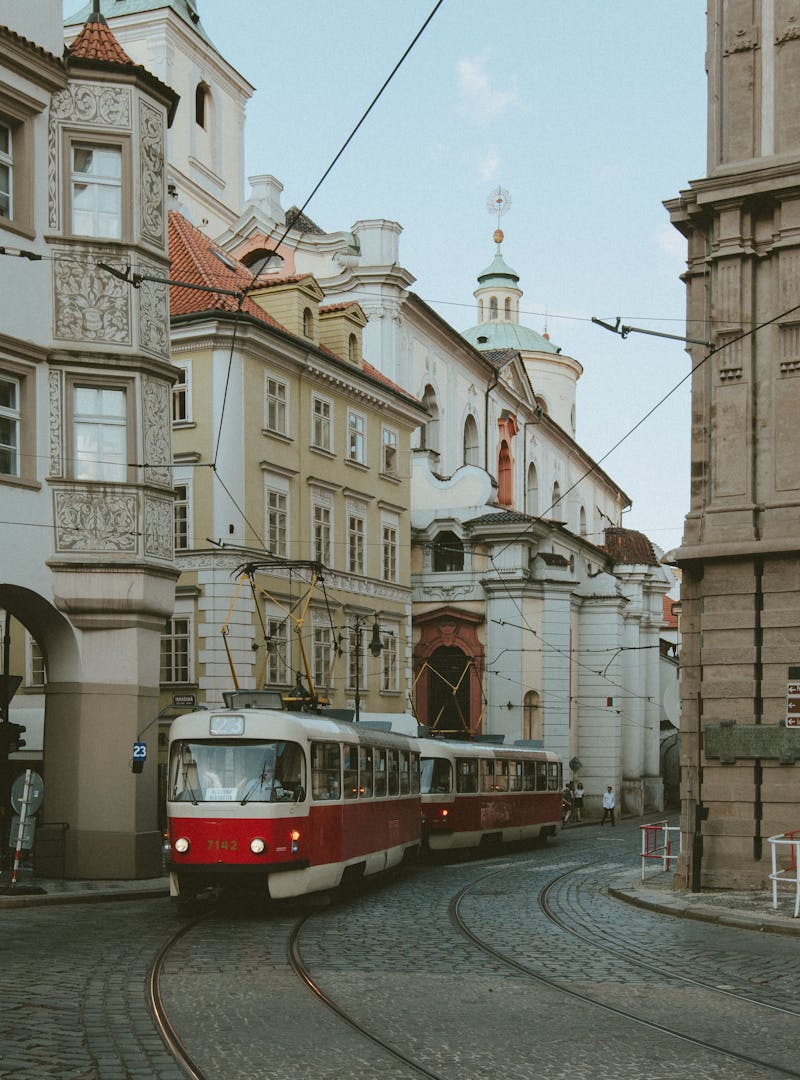
Prague is easy to explore on foot in its central core, but the climbs towards the Castle, Petřín and Vyšehrad make trams and the metro useful. Staré Město, Josefov and Malá Strana hold the best-known monuments; Vinohrady, Holešovice and Žižkov instead reveal an everyday city of cafés, markets, music and beer halls. Three days cover the essentials without rushing, while four or five leave room for museums and outer districts. The centre retains its medieval layout, with uneven cobbles and crowded passages: comfortable shoes and early starts matter. At sunset, the path along the Vltava provides clear views of Charles Bridge and the Castle complex.
Prague grew around fords on the Vltava, became the seat of the dukes of Bohemia and developed between the Castle, founded in the ninth century, and Vyšehrad. In the fourteenth century Charles IV, king of Bohemia and emperor, turned it into a European capital: he founded Charles University, enlarged the New Town and promoted the bridge bearing his name. The fifteenth-century Hussite Wars shaped Bohemian religious history. From the sixteenth century Prague remained within the Habsburg domains; the Defenestration of Prague helped trigger the Thirty Years’ War. During the nineteenth-century Czech National Revival, language and culture regained prominence as industry and railways transformed the city. Prague became capital of Czechoslovakia in 1918. Nazi occupation and persecution of the Jewish community were followed by communist rule. The Prague Spring was crushed in 1968; in 1989 the Velvet Revolution, led in part by Václav Havel, opened the democratic transition. Since 1993 it has been capital of the Czech Republic.
The most balanced periods are April-May and September-October: mild temperatures, green parks and days suited to long walks, although rain is changeable. June and early September bring abundant daylight but more visitors. July and August can be hot and crowded, especially around Old Town Square, Charles Bridge and the Castle. From November to March it is cold, with short days and possible snow; museums and cafés, however, are less congested. December attracts crowds for Christmas markets, so it is not always inexpensive. January and February are often the quietest months. Pack a waterproof layer in every season: weather changes quickly and evenings beside the Vltava feel cooler.
Prague Castle — a vast complex of courtyards, palaces and churches; its circuit includes St Vitus Cathedral, Old Royal Palace and Golden Lane. Charles Bridge — a pedestrian Gothic bridge lined with Baroque statues, best appreciated early in the morning. Old Town Square — the medieval heart framed by the Church of Our Lady before Týn, town hall and historic houses. Astronomical Clock — a fifteenth-century mechanism on the town hall tower, which offers a central panorama. Josefov — historic synagogues and Old Jewish Cemetery assembled within the Jewish Museum. Malá Strana — Baroque quarter below the Castle, with St Nicholas and terraced gardens. Petřín — green hill with lookout tower and paths. Vyšehrad — citadel above the Vltava, Basilica of St Peter and St Paul and national cemetery. Dancing House — contemporary architecture on the riverfront.
1 day: begin at the Castle and St Vitus Cathedral, descend through Malá Strana, cross Charles Bridge and finish among the Astronomical Clock, Old Town Square and Josefov. 2-3 days: add a full morning in the Jewish Quarter, Wenceslas Square and the National Museum; devote the afternoon to Kampa, Petřín or the gardens below the Castle. On day three follow the riverfront to the Dancing House, visit Vyšehrad and dine in Vinohrady or Žižkov. 5+ days: include the National Gallery, Technical Museum, Holešovice and residential districts; reserve a day for Kutná Hora by train or Karlštejn Castle. Leave time for concerts, historic breweries and unplanned walks along the Vltava.
Czech cooking is hearty and particularly suited to cold months. Svíčková: beef with root-vegetable, cream and cranberry sauce, served with bread dumplings. Guláš: a seasoned stew, generally less spicy than its Hungarian counterpart, accompanied by dumplings. Vepřo knedlo zelo: roast pork, cabbage and dumplings; smažený sýr: breaded fried cheese, a pub classic. Among soups and snacks, seek out bramboračka, sausages and chlebíčky. Prague ham appears at markets, where checking the price by weight before ordering is wise. Trdelník is widespread in the tourist centre but does not represent local baking alone: try koláče and větrník. A pale draught beer often costs about CZK 55-85 outside the main squares. A simple Czech lunch is roughly CZK 180-300; a mid-range dinner CZK 350-650, excluding drinks.
Staré Město contains the square, Clock and entrance to Charles Bridge: extremely convenient, but busy and expensive. Malá Strana, beneath the Castle, offers Baroque palaces, lanes and a quieter evening atmosphere. Josefov is central for Jewish heritage and fin-de-siècle buildings. Nové Město includes Wenceslas Square, theatres and many connections. Vinohrady is residential, elegant and rich in cafés, suitable for staying outside the busiest visitor circuit. Žižkov has pubs, clubs and a working-class character. Holešovice combines galleries, a market and converted spaces. Smíchov is practical for transport and services; Vyšehrad suits quiet walks and views.
Easter brings seasonal markets to the central squares and displays of Bohemian traditions. Prague Spring, from May into early summer, is the city’s leading classical music festival. United Islands periodically fills islands and urban spaces with concerts. In summer, Letní Letná presents new circus in Letná Park, while Summer Shakespeare uses historic settings. Dvořák Prague welcomes orchestras and soloists in early autumn. October’s Signal Festival creates evening trails of light and digital art. On 17 November, ceremonies and civic initiatives commemorate the Velvet Revolution. From late November to Epiphany, Christmas markets fill Old Town Square and Wenceslas Square; book early for weekends.
Václav Havel Airport Prague (PRG) lies west of the city and is the Czech Republic’s main airport. From Italy, direct links are typically flown by scheduled and low-cost airlines such as Ryanair, Wizz Air, easyJet and Smartwings, with routes varying by season and departure airport. From Milan, Venice, Bologna, Rome and other cities, a nonstop flight generally takes about 1 hour 25 minutes to 2 hours. Return fares may start at roughly €50-90 with only a small bag, but rise around public holidays and in December. For a fair comparison, include luggage, seat and transfer charges: PRG is well connected and does not require using distant alternative airports.
The centre is mainly walkable; for longer distances, the PID network combines three metro lines, trams, buses and urban trains. Time-based tickets permit transfers: approximately CZK 36-39 for 30 minutes, CZK 46-50 for 90 minutes, around CZK 140-150 for 24 hours and CZK 340-350 for 72 hours, depending on app or paper format. Validate paper tickets on first use. From PRG airport, trolleybus 59 reaches Nádraží Veleslavín in about 15 minutes; metro A then continues downtown, for a usual total of 35-45 minutes with a 90-minute PID ticket. Bus 100 instead links to Zličín and metro B. Airport Express serves the main railway station under a separate fare. Taxis and ride-hailing apps cost roughly CZK 600-900 depending on traffic and destination.
Prague is no longer as inexpensive as it once was, especially in the historic centre, but remains manageable with planning. Accommodation: hostel bed about CZK 450-900, budget double CZK 1,500-2,500, well-located mid-range hotel CZK 2,500-4,500; weekends and Christmas markets can raise rates. Meals: breakfast CZK 100-220, daily lunch CZK 180-300, dinner in a mid-range restaurant CZK 350-650 per person; beer away from the main squares about CZK 55-85. Transport: CZK 140-150 for 24 hours or CZK 340-350 for 72 hours. Sights: allow roughly CZK 1,200-2,000 for the Castle, Jewish Quarter, towers and one or two museums, selecting circuits carefully. A budget traveller might spend CZK 1,400-2,200 per day excluding accommodation; with a mid-range hotel and restaurants, about CZK 3,500-5,500.
The currency is the Czech koruna (CZK), not the euro; cards and contactless payment are widespread, though cash helps in small businesses. Decline dynamic currency conversion on terminals and use banks or exchanges showing clear commissions. Czech is the local language; English is common in visitor services. Type E sockets at 230 V accept many European plugs. Tap water is drinkable. Prague is generally safe, but pickpocketing and poor exchange rates require care in crowded areas. Restaurant tips are optional: around 5-10% for good service, stating the total before paying. EU citizens need a valid identity document and no visa. EU roaming applies according to your plan. The general emergency number is 112.
This site uses third-party cookies — Google Analytics for visit statistics and functional cookies for the flight search engine. By clicking "Accept" you consent to the use of cookies. Cookie policy