🇬🇷
Flights and Hotels in Athens
Cradle of Western civilisation, Athens combines Acropolis ruins with vibrant modern neighbourhoods and is the gateway to the Greek islands.
Cradle of Western civilisation, Athens combines Acropolis ruins with vibrant modern neighbourhoods and is the gateway to the Greek islands.
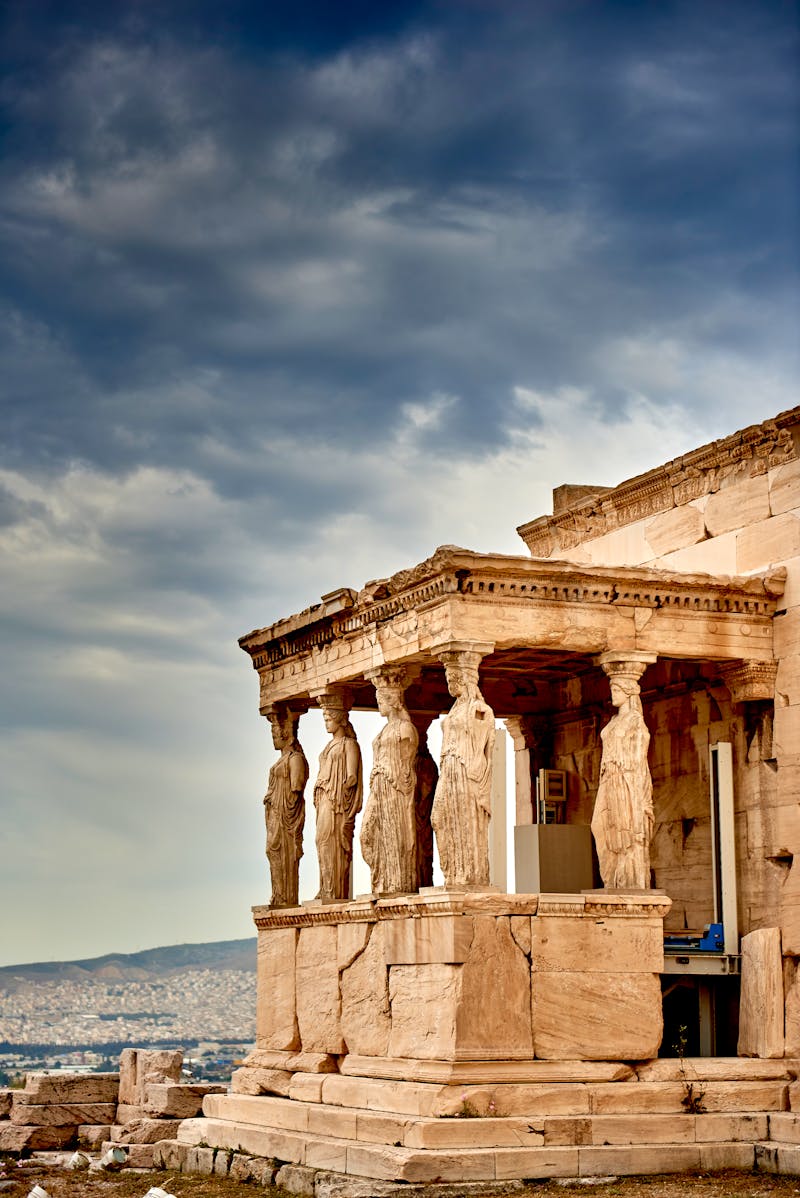
Athens calls for a different pace from orderly capitals: classical ruins, modern apartment blocks, markets and hills coexist across a broad, noisy city. The core between the Acropolis, Plaka, Monastiraki and Syntagma works on foot, while metro and buses reach museums, outer districts and Piraeus. Two days cover essential sites; three or four allow the Archaeological Museum, markets and coast. Climb the Acropolis in the morning, especially in hot months, and reserve at least two hours for its museum. The city is also a gateway to the islands, but ferries and the port need time of their own: never plan a tight connection after a flight. For wide views choose Lycabettus or Philopappos Hill.
Inhabited since Neolithic times, Athens reached its greatest prominence in the fifth century BC, when civic democracy—restricted to free men—accompanied the age of Pericles. The Parthenon, Propylaea, Erechtheion and Temple of Athena Nike rose on the Acropolis; political life, commerce and philosophy developed in the Agora. After the Peloponnesian War the city lost power but retained cultural prestige under Macedonian and Roman rule. It later entered the Byzantine Empire, passed to Latin powers and belonged to the Ottoman Empire from the fifteenth century. Monuments changed uses during those centuries, and an explosion severely damaged the Parthenon. Athens became capital of the new Greek state in the nineteenth century, while still relatively small. Neoclassical buildings and avenues accompanied expansion. Refugees from Asia Minor and rapid twentieth-century urbanisation created the modern metropolis. Occupation, civil war and dictatorship marked that century; after democracy returned, metro lines, pedestrian routes and museums helped reconnect the contemporary fabric with ancient sites.
April-May and September-October provide the best balance: temperatures suit hill climbs, daylight is ample and evenings pleasant. June-August brings intense heat, fierce sun and heavy flows towards the Acropolis and islands; visit sites early, drink frequently and use museums at midday. Winter is mild compared with northern Europe but can be rainy and windy; prices fall and monuments are quieter. March and November are changeable yet good for archaeology and neighbourhoods. Orthodox Easter alters services and demand, while events and strikes can affect transport. Choose late spring or early autumn to combine Athens with the sea; consider winter for an economical cultural break, checking seasonal opening arrangements before each outing.
Acropolis and Parthenon — the city's defining complex, exposed to sun and uneven underfoot; timed admission is often wise. Acropolis Museum — sculptures and finds arranged in visual dialogue with the hill, with transparent floors above excavations. Ancient Agora — civic centre of the polis, containing the well-preserved Temple of Hephaestus and reconstructed Stoa of Attalos. Roman Agora — Roman-period market with the Tower of the Winds. Temple of Olympian Zeus — monumental columns near Hadrian's Arch. Panathenaic Stadium — marble-clad arena associated with the first modern Games. National Archaeological Museum — essential Greek art from Mycenae through the Classical era. Philopappos Hill — paths, the Pnyx and free Acropolis views. Cape Sounion — coastal Temple of Poseidon requiring a dedicated excursion.
1 day: visit the Acropolis early, then its museum, Plaka and Anafiotika; continue through Monastiraki and the Ancient Agora and watch sunset from Philopappos. 2-3 days: add Syntagma and the National Garden, Temple of Olympian Zeus, Panathenaic Stadium and National Archaeological Museum. Spend one evening in Psyrri or Koukaki and one morning at Central Market; choose Lycabettus for a second viewpoint. 5+ days: explore the Stavros Niarchos Centre and coast by tram, Piraeus beyond its terminals and neighbourhoods such as Pangrati. Reserve a day for Cape Sounion or an organised Delphi trip. When continuing to islands, treat the ferry as a separate transfer and verify departure port, gate and sufficient margin after flight or metro.
The most practical street food is souvlaki or gyros in pita with tomato, onion and tzatziki. In tavernas order several plates to share: horiatiki with feta, dolmades, melitzanosalata, fava, octopus, saganaki and stuffed vegetables. Moussaka layers aubergine, meat and béchamel; home cooking includes stews, pulses and market fish. Try a sesame koulouri or spanakopita for breakfast, then baklava, galaktoboureko or loukoumades for dessert. Varvakios Central Market and surrounding streets reveal ingredients and popular kitchens, while Psyrri and Koukaki offer contemporary dining. Avoid picture menus on Plaka's busiest tourist streets. A pita costs about €3-5, a simple meal €12-20 and a complete mid-range dinner €25-40 before wine. Bread and water may arrive automatically, so ask whether they are charged.
Plaka is scenic and central, ideal for wandering but more tourist-oriented. Monastiraki combines market, metro and rooftop terraces, with crowds until late. Psyrri offers restaurants, murals and nightlife and can be noisy. Koukaki, beneath the Acropolis, has cafés and convenient accommodation in a residential setting. Syntagma simplifies transport and a first visit at central prices. Kolonaki is polished and climbs towards Lycabettus. Exarchia retains political culture and independent venues, although demonstrations can alter street conditions. Gazi focuses on nightlife. Piraeus mainly serves ferries and marinas: check your gate because the port covers a very large area.
Apokries Carnival precedes Lent with celebrations and costumes. Orthodox Easter brings processions, closures and departures to the regions: important to experience but requiring planning. Spring includes road races and cultural programmes. The Athens Epidaurus Festival presents theatre, music and dance in summer, including performances at the Odeon of Herodes Atticus. Concerts and open-air cinemas animate warm evenings. In autumn, the Athens Marathon finishes at the Panathenaic Stadium and alters traffic. Ohi Day on 28 October involves ceremonies and possible closures. In December, Syntagma and other public spaces host lights and seasonal events. Dates and venues change: consult official programmes, especially for performances inside ancient monuments.
Athens International Airport Eleftherios Venizelos (ATH), east of the city, is Greece's main airport. Aegean, easyJet, Ryanair, ITA Airways and seasonal carriers typically operate from Milan, Rome, Venice, Bologna, Naples and other Italian airports, with routes changing through the year. A nonstop flight lasts approximately 1 hour 45 minutes to 2 hours 30 minutes from central and northern Italy, less from some southern airports. Return fares occasionally begin around €60-120, but summer, luggage and island connections increase costs. Do not assume every ferry uses Piraeus: some routes leave Rafina or Lavrio, reached through different transfers from either the airport or city. Confirm the port before booking accommodation and transport.
Metro, buses, trolleybuses and trams form the OASA network. A 90-minute urban ticket costs approximately €1.20 and a day ticket €4.10, excluding airport links. Contactless payment and ATH.ENA Ticket are available, but every passenger must validate correctly. From ATH, metro line 3 reaches Syntagma in about 40 minutes and continues towards Piraeus; the airport fare is around €9. Bus X95 links the airport and Syntagma for approximately €5.50, with less predictable journey times; X96 runs to Piraeus. Taxis and traffic can take 35-60 minutes. Walk in the ancient centre with shoes suited to polished marble and slopes. The tram serves the coast. For ferries, check terminal and gate: Piraeus cannot be crossed quickly on foot, particularly with luggage.
Athens remains more affordable than many European capitals, although accommodation and Acropolis visits cost more in peak season. A hostel bed begins around €20-35, a budget double €55-90 and a mid-range hotel €90-160; Acropolis views and summer weekends raise rates. Allow €3-6 for a bakery breakfast, €4-7 for pita or a snack, €12-20 for a simple meal and €25-40 for a mid-range dinner. Urban transport often needs only €4-8 daily, excluding the airport. Sites and museums require roughly €30-60 per day when visiting several. A budget traveller can spend €65-95 a day including accommodation; a realistic mid-range is €130-200, without flights, ferries or distant excursions. Add a reserve for rooftop drinks, whose views command a premium.
The currency is the euro and the language Greek; English is common in visitor areas. Sockets are types C and F at 230V. Athens tap water is safe to drink, although some visitors prefer bottled water's taste. Tipping is optional: rounding up or leaving about 5-10% is appreciated when service is not included. The city is generally safe, but pickpocketing occurs on metro trains, airport buses and crowded streets; avoid unofficial taxis. EU citizens enter without a visa using valid identification. EU roaming applies according to your plan. In summer protect yourself from heat and sun. During demonstrations follow local instructions and avoid temporarily blocked streets; transport stations around the route may close without much notice.
This site uses third-party cookies — Google Analytics for visit statistics and functional cookies for the flight search engine. By clicking "Accept" you consent to the use of cookies. Cookie policy