🇭🇺
Flights and Hotels in Budapest
Split by the Danube between hilly Buda and lively Pest, Budapest amazes with thermal baths, ruin bars and majestic architecture at unbeatable prices.
Split by the Danube between hilly Buda and lively Pest, Budapest amazes with thermal baths, ruin bars and majestic architecture at unbeatable prices.
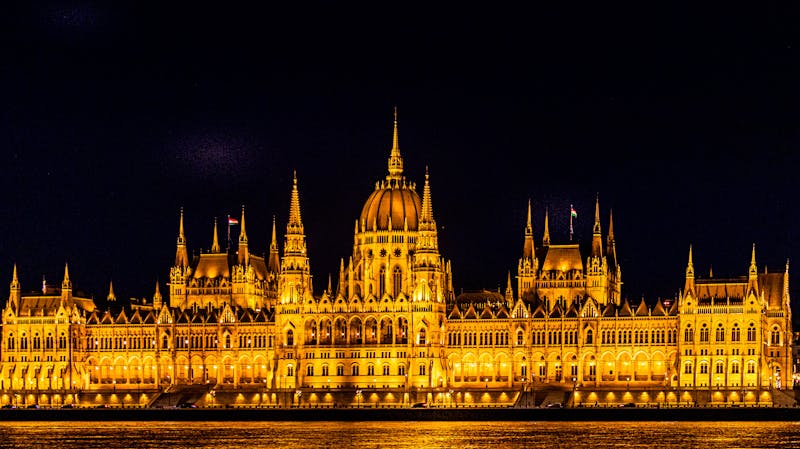
Budapest is read through both banks of the Danube: hilly Buda holds the Castle, residential districts and panoramic paths; flat Pest is monumental and livelier, with Parliament, markets and nightlife. The centre is extensive: three days cover the main sights, while four or five allow baths, museums and neighbourhoods without rushing. Bridges are part of the experience, and riverbanks give especially clear views at night. The baths differ: Széchenyi is large and open-air, Gellért is celebrated for architecture, and Rudas retains an Ottoman pool. Comfortable shoes help on Buda’s cobbles; in Pest, trams and the metro shorten journeys along broad avenues.
Aquincum, north of today’s centre, was an important Roman settlement in Pannonia. Medieval Buda became a royal seat of Hungary while Pest grew as a trading centre. The thirteenth-century Mongol invasion prompted fortifications; Matthias Corvinus made the fifteenth-century court a Renaissance centre. Buda fell to the Ottomans in 1541, leaving a lasting bathing culture. The Habsburgs retook it in the late seventeenth century. The Chain Bridge permanently linked the banks in the nineteenth century; Buda, Óbuda and Pest merged as Budapest in 1873. Boulevards, metro, Parliament and coffee houses followed. After the First World War Hungary lost much of its historic territory. Nazi occupation and Arrow Cross rule brought deportation and murder of Hungarian Jews. The 1944-45 siege devastated Budapest. The 1956 uprising against Soviet control was crushed. Since 1989 the city has been capital of democratic Hungary.
April-May and September-October offer the best balance of mild temperatures, walkable riverbanks and pleasant parks. June has long days; July and August can be very hot, crowded and pricier, although Margaret Island and outdoor pools provide relief. November-February is cold, sometimes snowy, with short days; thermal baths still make winter worthwhile. December draws visitors for Christmas markets and is not always inexpensive. March is changeable and windy. The 20 August national holiday brings events and large crowds beside the Danube. Bring swimwear and sandals for baths in every season; add a windproof layer for Buda, whose hills are more exposed.
Parliament — neo-Gothic landmark on the Danube; interiors require a guided route and identity document. Buda Castle — extensive complex with National Gallery, History Museum and terraces. Fisherman’s Bastion — neo-Romanesque lookout beside Matthias Church, facing Pest. Chain Bridge — symbolic road and pedestrian link between both banks. St Stephen’s Basilica — major Pest church with panoramic dome. Great Synagogue — centre of Jewish memory in the historic quarter. Shoes on the Danube — memorial to victims murdered by the Arrow Cross. Széchenyi Baths — thermal complex in Városliget with indoor and outdoor pools. Heroes’ Square — monumental space at the park entrance. Central Market Hall — nineteenth-century architecture, food downstairs and dining above.
1 day: begin at Buda Castle, Matthias Church and the Bastion; cross Chain Bridge for the basilica, Parliament and Shoes memorial, then dine in the Jewish Quarter. 2-3 days: add Heroes’ Square, Városliget and half a day at Széchenyi; visit the Great Synagogue, Central Market and Danube promenade. On day three choose the National Gallery, National Museum or House of Terror, followed by Margaret Island or Gellért Hill. 5+ days: include Óbuda and Aquincum, Rudas or Gellért baths, Bartók Béla út and outer areas. Reserve a day for Szentendre by HÉV or the Danube Bend. Alternate museums and bathing: both require several hours and advance booking at busy times.
Hungarian cooking uses paprika, onion, sour cream and slow cooking. Gulyás is a beef and vegetable soup, not the thick stew often served abroad; pörkölt is the stew. Try chicken paprikash with nokedli, stuffed cabbage, fisherman’s soup and duck. Lángos is fried dough with sour cream and cheese; kürtőskalács is cylindrical spit-baked pastry. Cafés serve Dobos, Esterházy and rétes. At Central Market compare tourist-floor prices with neighbourhood stalls. Wines include sweet Tokaji and reds from Eger and Villány; pálinka is a strong fruit spirit. A simple lunch costs about HUF 3,500-6,000, a mid-range dinner HUF 7,000-12,000 per person; central venues may add around 10-15% service or tip.
District V contains Parliament, basilica and riverfront: central, elegant and costly. District I on Castle Hill is scenic and quiet at night but involves slopes. District VII combines synagogues, courtyards and ruin bars: lively and noisy on weekends. District VI follows Andrássy Avenue from Opera to Heroes’ Square. District VIII around the Palace Quarter has restored architecture and often lower rates. District IX combines Central Market, universities and riverside venues. Újlipótváros in XIII is residential and café-rich near Margaret Island. Óbuda preserves Roman traces and local rhythm; Bartók Béla út in Buda suits cafés and galleries.
15 March commemorates the 1848 revolution with national ceremonies. In spring, Budapest Spring Festival combines music, theatre and art. May Day brings park activities. Summer concerts and events use Városliget, Margaret Island and the Danube banks; the annual Sziget Festival on Óbuda Island raises demand and prices. 20 August, St Stephen’s Day and national foundation holiday, traditionally culminates in Danube events. Autumn brings cultural, wine and marathon programmes. From late November, Advent markets open in the centre, notably by the basilica and Vörösmarty tér. Dates, access and transport changes vary; always check the official calendar.
Budapest Ferenc Liszt Airport (BUD) lies about 16 km southeast of the centre. From Italy, Ryanair, Wizz Air and scheduled carriers typically fly direct from Milan, Rome, Bologna, Venice, Naples, Bari and other airports, with seasonal variations. Flights take roughly 1 hour 20 minutes to 2 hours. Returns can start around €45-90 with a small bag, rising around holidays, summer and New Year. BUD is the only practical airport for the city; foreign alternatives rarely save money after transfers. Budapest is also about two and a half hours by train from Vienna and connected with other Central European capitals, useful for an itinerary without regional flights.
BKK operates metro, tram, bus and trolleybus services; M1-M4 cover main axes and trams 2, 4 and 6 are useful. Single tickets require validation and transfers are not always included; 24- or 72-hour travelcards simplify travel. Indicative prices are HUF 500 for a ride, HUF 2,750 for 24 hours and HUF 5,750 for 72 hours. From BUD airport, bus 100E runs directly to Deák Ferenc tér in about 35-50 minutes with a separate ticket, excluded from ordinary travelcards. Bus 200E reaches Kőbánya-Kispest for metro M3 under regular fares, taking about 50-65 minutes total. Official taxis cost roughly HUF 11,000-16,000. BudapestGO provides journey planning and digital tickets.
Budapest remains cheaper than many western capitals, but the centre, baths and nightlife are increasingly costly. Accommodation: hostel bed HUF 7,000-13,000, budget double HUF 22,000-38,000, central mid-range hotel HUF 38,000-65,000; festivals raise rates. Meals: breakfast HUF 2,000-4,000, lunch HUF 3,500-6,000, mid-range dinner HUF 7,000-12,000; ruin-bar drink HUF 2,000-4,000. Transport: about HUF 2,750 for 24 hours or HUF 5,750 for 72, excluding 100E. Sights: baths HUF 10,000-16,000; museums and tours often HUF 4,000-12,000. Budget day without accommodation: HUF 18,000-28,000; with mid-range hotel, restaurants and baths: HUF 50,000-80,000. Pay in forints and decline dynamic conversion.
Currency is the Hungarian forint (HUF), not the euro; cards are widespread, cash useful in small businesses. Decline dynamic conversion and choose HUF billing. Hungarian is the language; English is common in visitor areas. Type F sockets use 230 V. Tap water is drinkable. Budapest is generally safe, but pickpockets, poor exchange rates and unclear venue prices require care. Check whether service is included; otherwise about 10% is common. EU citizens need valid identification and no visa; EU roaming follows their contract. Baths require swimwear, sandals and sometimes a cap only in swimming pools; lockers or cabins depend on ticket. Emergency number: 112. Avoid unmarked taxis hailed in the street.
This site uses third-party cookies — Google Analytics for visit statistics and functional cookies for the flight search engine. By clicking "Accept" you consent to the use of cookies. Cookie policy