🇫🇷
Flights and Hotels in Paris
The City of Light never stops enchanting. From the Eiffel Tower to Montmartre, from bistros to museums, Paris is the essence of European culture and romance.
The City of Light never stops enchanting. From the Eiffel Tower to Montmartre, from bistros to museums, Paris is the essence of European culture and romance.
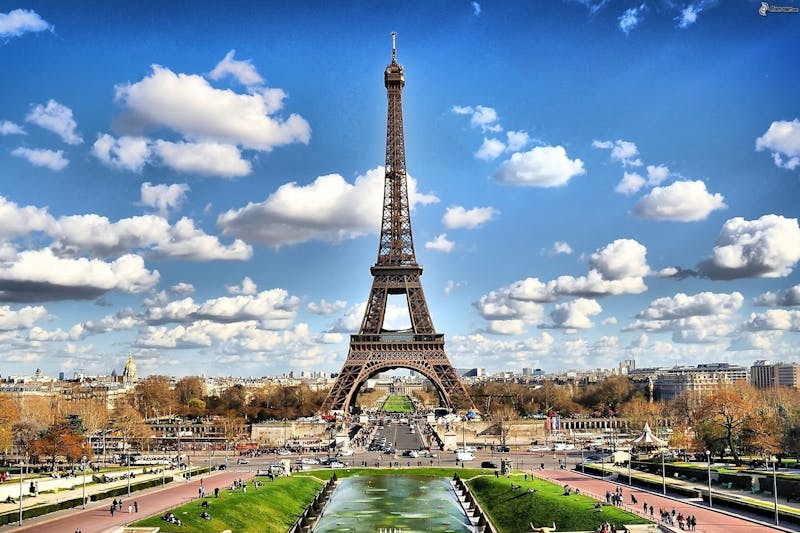
Paris is not just the Eiffel Tower. It is the literary cafés of Saint-Germain-des-Prés, walks along the Seine at sunset, the flea markets of Saint-Ouen, the hidden gardens of the Marais and that singular light that inspired the Impressionists. Every arrondissement is a village with a soul of its own: the 20 districts coil in a spiral from the Louvre out towards the ring road, and the city within the walls measures barely 10 km from west to east. The metro gets you anywhere in 20-30 minutes, but the central quarters deserve to be explored on foot. For the bare essentials — Louvre, Eiffel Tower, Île de la Cité, Montmartre, Marais — you need 3 full days; with 5-7 you can add Versailles, the Musée d'Orsay and the less-trodden neighbourhoods.
Paris began as Lutetia, a settlement of the Celtic Parisii tribe on the Île de la Cité, conquered by the Romans in 52 BC. Clovis, king of the Franks, made it his capital in 508. In the Middle Ages it became the intellectual beacon of Europe: work on Notre-Dame started in 1163, the Sorbonne was founded in 1257, while Philip Augustus raised the fortress of the Louvre. On 14 July 1789 the storming of the Bastille ignited the French Revolution; in 1804 Napoleon crowned himself emperor in Notre-Dame. Between 1853 and 1870 Baron Haussmann gutted the medieval city, laying out the boulevards, the pale stone buildings and the parks we see today. The Eiffel Tower, built for the 1889 World's Fair, was meant to be dismantled after twenty years. During the Belle Époque and between the wars, Montmartre and Montparnasse were the art capital of the world, from Picasso to Modigliani. Occupied in 1940, Paris was liberated in August 1944 almost unscathed. The 2019 fire devastated Notre-Dame, which reopened for worship after five years of exemplary restoration.
Spring (April-June) and autumn (September-November) are magical: 12-22°C, long days, gardens in bloom or rust-coloured avenues, and ideal light for photography. Summer is lively but crowded: July and August bring 25-30°C with peaks above 35, the longest queues at the Louvre and the Eiffel Tower, but also Paris Plages along the Seine and the more relaxed city of August, when many Parisians leave and some bistros close. Winter (December-February) is grey and damp, 3-8°C, but the museums can be enjoyed without crowds, the Christmas lights on the Champs-Élysées are worth the trip and hotel rates drop by 20-30%. Beware of the fashion weeks and major trade fairs (January, March, June, early October): room prices double. May has many French bank-holiday weekends, with busy museums.
Eiffel Tower — lift to the summit around €36, stairs + lift cheaper; booking online is essential, otherwise queues last hours; the best view is from the Trocadéro at dawn. Louvre — tickets around €22, online only with a time slot; closed on Tuesdays; the world's most visited museum needs at least half a day, with quieter entrances at the Carrousel and the Porte des Lions. Notre-Dame — free entry, reopened after restoration; free booking via the app is advisable to skip the line. Sainte-Chapelle — around €13, the most spectacular Gothic stained glass in Europe; go when the sun is out. Musée d'Orsay — around €16, closed on Mondays: the Impressionists inside a former railway station. Arc de Triomphe — terrace around €16, with a panorama along the axis of the Champs-Élysées. Sacré-Cœur — free basilica at the top of Montmartre, dome climb for a fee (around €8). Versailles — Passport for palace + gardens around €32, RER C in 40 minutes; closed on Mondays, allow a full day.
1 day: morning on the Île de la Cité with Notre-Dame and the Sainte-Chapelle, a walk along the Seine to the Louvre (exterior and Tuileries only), lunch in the Marais, afternoon on the Champs-Élysées and at the Arc de Triomphe, sunset at the Eiffel Tower seen from the Trocadéro, evening cruise on the Seine. 2-3 days: add the Louvre inside (half a day, pre-booked), the Musée d'Orsay, Montmartre early in the morning with the Sacré-Cœur and Place du Tertre, the Latin Quarter with the Panthéon, drinks along the Canal Saint-Martin. 5+ days: a full day at Versailles (RER C), Père-Lachaise with the graves of Jim Morrison and Oscar Wilde, the Opéra Garnier, the covered passages of the 2nd, the Saint-Ouen flea market on a Sunday; alternatively a day trip to Giverny (Monet's gardens, April to October) or to Disneyland Paris on the RER A.
Croissants and pain au chocolat in the morning from an artisan bakery (look for the «artisan boulanger» sign), a bistro with steak-frites or confit de canard for lunch, cheese and wine in the evening. The classics: gratinéed onion soup, snails à la bourguignonne, bœuf bourguignon, a croque-monsieur at the counter, Brittany oysters in the brasseries, crêpes and Breton galettes around Montparnasse. Don't miss the falafel of rue des Rosiers in the Marais (L'As du Fallafel is the most famous), the macarons of Pierre Hermé or Ladurée, and dinner at the Enfants Rouges covered market, the oldest in Paris. The formule midi (starter + main or main + dessert) costs €18-25 and is the smartest way to try good bistros; in the evening expect €40-60 with wine. Avoid the cookie-cutter brasseries with laminated menus around the Eiffel Tower and Saint-Michel. A baguette tradition, some camembert and a Loire red in a park: the cheapest and loveliest Parisian lunch there is.
Le Marais (3rd-4th) for boutiques, galleries and nightlife, the Jewish and LGBT heart of the city. Saint-Germain-des-Prés (6th) for literary cafés such as the Flore and Deux Magots, and the Jardin du Luxembourg. Montmartre (18th) for the bohemian atmosphere, the staircases and the hidden vineyard behind the Sacré-Cœur. Canal Saint-Martin (10th) for hipster Paris: iron footbridges, design shops, drinks on the quaysides. Belleville (19th-20th) for its multicultural mix, street food and street art. The Latin Quarter (5th) for bookshops, the Panthéon and student life. The elegant, residential 7th puts the Eiffel Tower on your doorstep; Opéra (9th) has the Galeries Lafayette and Printemps department stores.
21 June: Fête de la Musique, free concerts in every street and square until late at night. 14 July: Bastille Day, military parade on the Champs-Élysées and fireworks at the Eiffel Tower. July-August: Paris Plages, urban beaches on the banks of the Seine and at the Bassin de la Villette. May-June: Roland Garros, the Grand Slam tournament on the clay of Porte d'Auteuil. July: the Tour de France finish on the Champs-Élysées. Early June: Nuit Blanche, an all-night contemporary art event with free installations. October: Fête des Vendanges in Montmartre, the harvest of the urban vineyard with parades and tastings. Third Thursday of November: Beaujolais nouveau in the bistros. December: Christmas markets at the Tuileries and La Défense, animated window displays of the department stores on Boulevard Haussmann. Fashion weeks in January, March, June and October: hotel prices soar.
Charles de Gaulle (CDG) is the main hub: Air France and ITA Airways fly there from Rome Fiumicino, Milan Linate, Venice, Bologna and Naples, with easyJet serving several airports. Orly (ORY) handles European flights: ITA, easyJet, Vueling and Transavia from Milan, Rome, Naples, Palermo and Catania. Beauvais (BVA), 85 km to the north, is the base for low-cost Ryanair and Wizz Air from Bergamo, Pisa, Bari and Alghero: fares often at €20-40, but add the shuttle and the extra time. Indicative flight times: Milan 1h30, Turin 1h25, Venice 1h35, Rome 2h10, Naples 2h20, Palermo 2h40. Return fares from Italy run €40-150 in low season, €150-300 around Christmas, Easter and long weekends.
The metro is the best way around: 14 dense lines, frequent trains from dawn to around 1 am (2 am at weekends). A single ticket costs about €2.50, loaded onto the rechargeable Navigo Easy card or the app; the 10-ride carnet brings the price down, and the weekly Navigo pass (about €32, Monday to Sunday) pays off from the third day and also covers Versailles and the airports. From CDG: RER B to Châtelet in 35 minutes, about €13; Roissybus to the Opéra, about €17. From Orly: metro line 14 in 25 minutes, about €14; Orlybus to Denfert-Rochereau. From Beauvais: official shuttle to Porte Maillot, €17-20, 1h45-2h. Flat-rate taxis: CDG-centre €56-65, Orly-centre €36-44 depending on the river bank. Vélib' shared bikes and the Batobus on the Seine round out the picture.
Return flight from Italy €40-150 in low season, up to €250-300 at peak times. Hotels: hostels and budget double rooms €35-80 per night; 3-star in central districts €120-200 in low season, €200-320 in high; 4-star €250-450; the palace hotels exceed €800. Sleeping outside the centre along a metro line saves 30-40%. Tourist tax: from about €1 to over €10 per night depending on category. Meals: bakery breakfast €4-7, formule midi €18-25, bistro dinner €40-60 with wine, street crêpe or falafel €6-9. Attractions: Paris Museum Pass around €62 for 2 days, around €77 for 4; it pays for itself with three museums a day. Transport: €15-32 per week. Total for a couple's weekend (flights excluded): €450-700 in low season, €700-1,200 in high.
Currency: euro. Language: French; English is widely spoken in tourist areas, but a «bonjour» when entering shops and cafés is considered basic manners and changes the welcome. Power sockets: type E, 230V; two-pin European plugs fit without an adapter, UK plugs need one. Tap water is safe and pleasant; the historic green Wallace fountains offer it free in the street. Safety: the central districts are safe, but pickpocketing is frequent on metro line 1, on the RER B and at the foot of the Sacré-Cœur; watch out for shell games and fake petitions. Tipping is not compulsory: service is included («service compris»); round up or leave 5-10% if you're pleased. SIM and roaming: EU tariffs apply in France with no extra charges (EU roaming). Documents: EU citizens only need a valid identity card, no visa required.
This site uses third-party cookies — Google Analytics for visit statistics and functional cookies for the flight search engine. By clicking "Accept" you consent to the use of cookies. Cookie policy