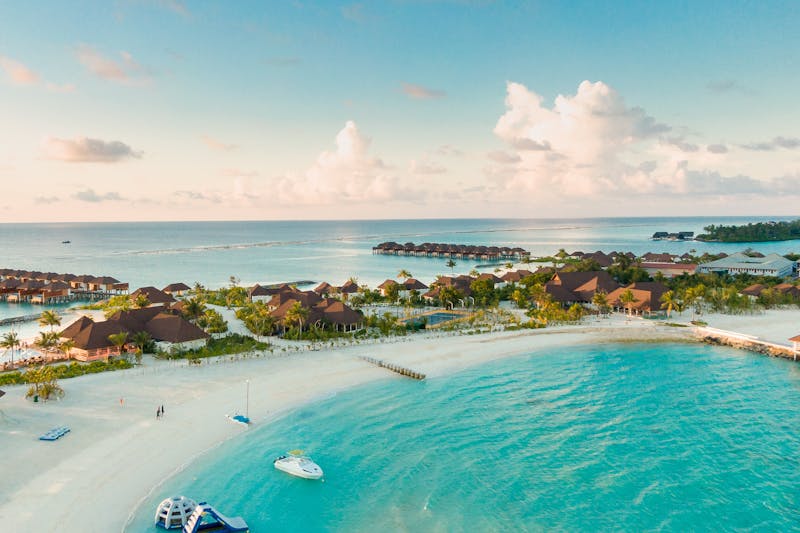
Sharm el-Sheikh is the gateway to the Red Sea. Ras Mohammed reef, Tiran diving, Naama Bay beaches and all-inclusive resorts make it the cheapest and most spectacular seaside destination reachable from Europe in hours.
Sharm El Sheikh offers a sea with no equal in the Mediterranean: the Red Sea floor is a natural aquarium of colourful coral, tropical fish, turtles and dolphins, with visibility often beyond 20-30 metres. People come here for the snorkelling and diving even before the beach: many hotels have the reef right under their own jetty. The all-inclusive resorts keep prices low all year round, with packages from Italy that cost less than a week in Sardinia. Excursions into the Sinai desert, the night climb up Mount Moses and St Catherine's Monastery round off the experience. The town itself is functional rather than pretty: the real asset lies underwater.
📜 History at a glance
Until the 1960s Sharm El Sheikh was little more than a Bedouin fishing village overlooking the Strait of Tiran, the strategic passage to the ports of Aqaba and Eilat. That very position pushed it to the centre of history: occupied by Israel after the Six-Day War of 1967 and renamed Ofira, it saw the first dive centres and the first tourism appear at Naama Bay. Under the Camp David accords the peninsula went back to Egypt and Sharm was returned in 1982; a year later Ras Mohammed became Egypt's first national park. From the 1990s onward the government turned this coast into a tourism machine drawing millions of visitors a year. Nicknamed the «City of Peace» for the many international summits it has hosted — from the Summit of the Peacemakers in 1996 to the COP27 climate conference in 2022 — it also recovered from the attacks of 2005, reclaiming its place as the flagship beach destination of the Egyptian Red Sea.
📅 Best time to visit
Sharm is a year-round destination: it almost never rains and the sea stays between 21 and 28°C. The best period runs from October to May, with 25-30°C by day and pleasant evenings; that is the European winter, when a week in the warmth costs about as much as a weekend in Italy. July and August are scorching (often 38-40°C), but the dry heat and the breeze make them bearable under a parasol, and the sea is at its finest. January and February bring warm days but cool evenings (15-17°C): pack a jumper. For diving, visibility is excellent all year; the water is warmest between July and October. During Ramadan resort services run as normal, though excursions in town may follow a different rhythm.
Why visit Sharm el-Sheikh
Ras Mohammed National Parkthe Strait of TiranNaama Baythe Old Market (Sharm el-Maya)Al Sahaba MosqueRas Um SidSOHO SquareNabqMount Sinai (Mount Moses)St Catherine's Monasterythe Blue Hole at Dahabthe Sinai desert
Ras Mohammed National Park — the southern tip of Sinai, home to the legendary Shark Reef and Yolanda Reef; visited by boat from Sharm or overland, with an entrance fee (around 10-20 dollars). Strait of Tiran — the four reefs of Jackson, Gordon, Thomas and Woodhouse, the classic destination for snorkelling boat trips. Naama Bay — the historic bay of Sharm tourism, a pedestrian promenade of cafés, bazaars and dive centres. Al Sahaba Mosque — in the Old Market, a recent mosque with theatrical architecture, open to visitors outside prayer times. Ras Um Sid — a lighthouse and a spectacular reef reachable from shore, among the best snorkelling spots in town. St Catherine's Monastery — a UNESCO site at the foot of Mount Sinai, founded in the 6th century and home to the burning bush; about 220 km from Sharm. Mount Sinai (Mount Moses) — 2,285 metres, climbed at night for sunrise over the desert. The Blue Hole at Dahab — the famous blue sinkhole about an hour's drive away, with snorkelling along the rim within everyone's reach.
Suggested itineraries
1 day: a morning of snorkelling on the hotel reef or at Ras Um Sid, an afternoon in the Old Market between the souk and the Al Sahaba Mosque, sunset at Farsha and a fish dinner in Naama Bay. 2-3 days: a full day by boat to the Strait of Tiran or Ras Mohammed (the single best trip here); then quad biking or a Bedouin dinner in the desert at sundown; a third day on the beach with an evening stroll around SOHO Square. 5+ days: add the overnight climb of Mount Moses for sunrise and St Catherine's Monastery, a day in Dahab with the Blue Hole, a try dive or a PADI course and, with two spare days, the long trip to Cairo or Luxor (for which the ordinary visa is required).
🍽️ Local cuisine
Resorts revolve around international buffets, but Egyptian cooking deserves a night out. Classic dishes: koshary (rice, pasta and lentils with tomato sauce and fried onions), ful medames of stewed fava beans, ta'meya (the Egyptian falafel), hummus, shawarma and grilled kofta. Fish: in the seafront restaurants of Naama Bay and the Old Market you pick your catch from the counter and pay by weight; Fares Seafood is a local institution. Sweets and drinks: om ali (a warm pastry-and-milk pudding), baklava, mint tea, karkadeh (hibiscus infusion) and sugar-cane juice. Local beer (Stella, Sakara) is served in tourist venues and hotels. A local meal costs 150-300 EGP, a fish dinner 600-1,200 EGP. For sunset, the panoramic Farsha café at Ras Um Sid has long since become a classic.
Neighbourhoods to explore
Naama Bay: the historic tourist centre — pedestrian promenade, nightlife, shopping and dive schools. Sharks Bay and SOHO Square: quiet resorts to the north, close to the airport, with a citadel of restaurants and evening entertainment. Hadaba and Ras Um Sid: a residential plateau with some of the best shore-entry reefs in the city. Sharm el-Maya and the Old Market: the local soul, a souk made for haggling, the Al Sahaba Mosque and the marina where the boats leave for Ras Mohammed. Nabq: the newest strip of large resorts to the north, windy and beloved by kitesurfers. Dahab (about an hour's drive): a bohemian little town, the Blue Hole and an atmosphere that is the exact opposite of the resorts.
🎭 Events and festivals
The calendar follows the Islamic festivals, which move back by about 11 days each year. During Ramadan the resorts run as normal, but local life slows by day and lights up after sunset; the two feasts of Eid al-Fitr and Eid al-Adha fill the hotels with Egyptian families. 25 April, Sinai Liberation Day, commemorates the peninsula's return to Egypt. Sham el-Nessim, the Monday after Coptic Easter, is the ancient spring festival that locals celebrate on the beach. 7 January is Coptic Christmas, a national holiday. At New Year the resorts stage gala dinners and fireworks, in the most expensive week of the year; in spring the city hosts cultural festivals and diving-related events.
How to get there
Sharm El Sheikh International Airport (SSH) is Egypt's second busiest and receives direct flights from all over Europe. From Italy you can fly with the charter airline Neos (Milan Malpensa, Verona, Bologna, Rome and other cities, often within package deals), easyJet from Milan Malpensa, Wizz Air from Malpensa and Rome Fiumicino, and Air Cairo from Bergamo and Rome. Flight time: about 4 hours from Milan, 3 hours 45 from Rome. Return fares start at €120-180 in low season with the low-cost carriers and climb to €250-400 during school holidays. EgyptAir flies via Cairo as an alternative. The resort transfer is included in most packages; the airport is just 9 km from Naama Bay.
🚇 Getting around
Sharm has no real public transport: you get around by taxi, by hotel shuttle or on the shared minibuses (microbuses) that run along Peace Road for a few Egyptian pounds, used mainly by locals. Taxis: never metered — agree the fare BEFORE getting in; a ride from Naama Bay to the Old Market costs about 150-300 EGP. From the airport: 10-25 minutes to the hotel zones; haggle a taxi (around 250-450 EGP) or pre-book a transfer for €10-15, included in package holidays. Excursions: Dahab, St Catherine and Cairo are reached on organised tours or with the Go Bus and East Delta coaches from the Hay el-Nour bus station. Renting a car is possible but of little use: checkpoints and local driving habits argue against it.
Budget and prices
The classic format is the flight + 7 nights all-inclusive package: per person, from about €550-800 in low season to €1,000-1,500 over Christmas, Easter and August. Hotel only: a 4-star all-inclusive costs €60-120 per night for a double, 5-star reef-front resorts €130-250; guesthouses and 3-star hotels from €25-50. Eating out: local lunch 150-300 EGP, fish dinner 600-1,200 EGP, beer 100-180 EGP. Activities: snorkelling boat trip €25-45, single dive €35-50, PADI Open Water course €280-400, St Catherine excursion €40-70, desert quad biking €25-40. Extras: for tips and taxis allow €50-100 per week. A week for two, all in with a couple of excursions: €1,400-2,000 in low season, €2,500-3,500 in high season.
📋 Practical info
Currency: the Egyptian pound (EGP); euros and dollars are accepted almost everywhere, but keep small cash for tips (baksheesh, 20-50 EGP per service). The language is Arabic; English is spoken everywhere and Italian is common in the resorts. Sockets are type C/F at 220V: European plugs fit without an adapter. Tap water is NOT drinkable: sealed bottles only. Local SIM cards (Vodafone, Orange, e&) cost a few euros at the airport; EU roaming does not apply. Visas for EU citizens: for stays limited to Sharm, Dahab, the coast up to Taba and St Catherine there is a free «Sinai only» stamp, valid about two weeks; for Cairo, Luxor and generally for Ras Mohammed overland you need the ordinary visa (about 25 dollars on arrival, or an e-Visa). Rules change: check the official travel advice before departure. Tourist areas are well guarded; for the Sinai interior, organised excursions only.
💡 Practical tips
The free «Sinai only» stamp is enough for Sharm and Dahab (about 14 days): ask for it on arrival if you are not leaving Sinai.
Snorkelling at Ras Mohammed ranks among the best in the world: book a boat excursion.
Always haggle in the markets: the first price is 3-5 times the real one.
Pack reef shoes and a UV shirt: coral cuts and the sun burns even in winter.
Never touch or stand on the coral: it is forbidden and fined in the parks.
The Mount Moses climb is done at night: fleece and closed shoes even in summer.
Farsha at Ras Um Sid for sunset: mint tea with the most photographed view in Sharm.
The classic formula is 7 nights, the right balance of sea, reef and a couple of excursions. In 4-5 days you can still enjoy the reef and a boat trip; beyond 10 days it is worth adding Dahab, St Catherine's Monastery or an extension to Cairo with the ordinary visa.
From October to May the climate is perfect, with 25-30°C and pleasant evenings; it is also the period when Europe shivers and prices stay competitive. Summer is scorching but dry, with the sea at its warmest. Only the Christmas, Easter and August weeks are worth avoiding if you want low fares.
A flight plus 7 nights all-inclusive package starts at about €550-800 per person in low season and exceeds €1,000-1,500 at peak times. On the spot you spend little: allow €25-45 for a boat excursion and a few dozen euros a week for tips and taxis.
To stay only in Sharm, Dahab and along the Gulf of Aqaba coast, EU citizens receive a free «Sinai only» stamp on arrival, valid about two weeks. To visit Cairo, Luxor or leave the zone you need the ordinary visa, about 25 dollars. Rules change: always check the official travel advice before departure.
The airport lies about 9 km from Naama Bay and 18 km from the Old Market: a 10-25 minute drive. Nearly all packages include a coach or minivan transfer. Otherwise book a private transfer (€10-15) or haggle a taxi on the forecourt, around 250-450 EGP depending on the area.
The tourist zones are among the most closely watched in Egypt, with checkpoints and hotel security; ordinary crime is very low. Common sense applies as anywhere: no independent overland travel into the Sinai interior, organised excursions only, and the usual care with wallets and haggling in the markets.
Yes: the Red Sea rarely drops below 21-22°C between January and March and reaches 28-29°C between August and October. A shorty wetsuit or a thermal top is enough for winter snorkelling; out of the water the days are warm, but the evenings call for a jumper.
This site uses third-party cookies — Google Analytics for visit statistics and functional cookies for the flight search engine. By clicking "Accept" you consent to the use of cookies. Cookie policy