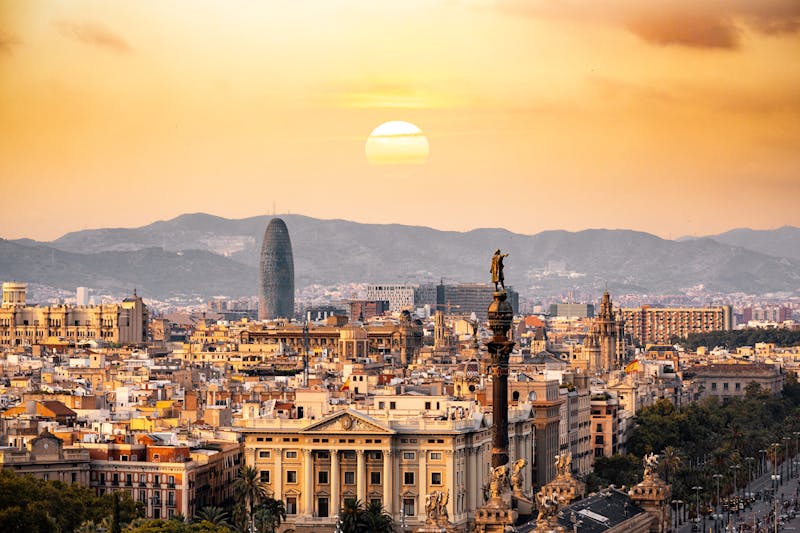
The Catalan capital on the Mediterranean, Barcelona combines Gaudí's genius, two thousand years of history and outstanding food. Here is the practical guide to organising flights, hotels and your days in the city.
Barcelona is big but easy to read: the Ciutat Vella (Barri Gòtic, Born, Raval) is walkable, while the metro works best for the Eixample, Gràcia and Montjuïc. Gaudí's monuments demand planning: the Sagrada Família must be booked online days or weeks ahead, Park Güell limits entry to its monumental zone with timed slots, and Casa Batlló and La Pedrera absorb 1-2 hours each. Two full days cover the Sagrada Família, the Barri Gòtic, Park Güell and an evening of tapas; a third day is needed for Montjuïc or the beach. The rhythm is Spanish: lunch from 2pm, dinner from 9pm, and between June and September the humid heat calls for afternoon breaks.
📜 History at a glance
Barcelona began as Barcino, a Roman colony founded under Augustus at the end of the 1st century BC: stretches of the Roman walls are still visible in the Barri Gòtic. In the Middle Ages the County of Barcelona, joined to the Crown of Aragon, dominated Mediterranean trade: the cathedral, Santa Maria del Mar and the Llotja date from the fourteenth century. On 11 September 1714, after a thirteen-month siege, the city fell to the Bourbon troops of Philip V, who abolished Catalonia's institutions: that date is now the Diada, Catalonia's national day. The industrial nineteenth century brought the Cerdà plan (1859), which drew the Eixample's grid, and the Modernisme of Gaudí, Domènech i Montaner and Puig i Cadafalch, celebrated by the Universal Exhibitions of 1888 and 1929. After the Civil War, the Franco regime long repressed Catalan language and culture, which revived with democracy. The 1992 Olympics finally turned the city towards the sea, creating the beaches and the Vila Olímpica and launching the tourist Barcelona of today.
📅 Best time to visit
May-June and September-October are the best periods: 20-26°C, swimmable sea in late summer, long days and bearable queues. July and August are hot and humid (28-31°C) and very crowded; in August many neighbourhood places close for holidays, though the Festa Major de Gràcia brings the decorated streets to life. Winter is mild (10-15°C by day) and fairly dry: perfect for museums and low prices, less so for the beach. Beware of late February-early March: during the Mobile World Congress hotels triple their rates. September brings La Mercè, the city's great festival. Rain concentrates between October and November, in short but intense downpours.
Why visit Barcelona
Sagrada FamíliaPark GüellCasa BatllóLa Pedrera (Casa Milà)Barri GòticCathedralLa RamblaBoqueria MarketSanta Maria del MarEl BornMuseu PicassoPalau de la Música CatalanaBarcelonetaMontjuïcFundació Joan MiróMNACCamp NouBunkers del CarmelTibidabo
Sagrada Família — Gaudí's unfinished masterpiece, under construction since 1882: basic entry around €26, around €36 with the tower climb, online booking practically compulsory days in advance. Park Güell — the monumental zone (the salamander, the undulating bench) costs around €10 with timed entry; the rest of the park is free. Casa Batlló — a façade of bones and scales on Passeig de Gràcia, from around €29 with an immersive audio guide. La Pedrera (Casa Milà) — the rooftop of warrior chimneys, from around €28. Barcelona Cathedral — Catalan Gothic in the heart of the Barri Gòtic, cloister with Santa Eulalia's thirteen geese, tourist entry around €11. Palau de la Música Catalana — a UNESCO-listed Modernista concert hall, guided visit around €18; better still, a concert. Museu Picasso — the painter's formative years across five Born palaces, around €15. Montjuïc — the castle (around €9), Fundació Joan Miró, MNAC and the Font Màgica: go up by funicular or cable car.
Suggested itineraries
1 day: morning at the Sagrada Família (first booked slot), then Passeig de Gràcia with Casa Batlló and La Pedrera from outside, lunch at the Santa Caterina market, afternoon in the Barri Gòtic and Born with the Museu Picasso, sunset and tapas in Poble-sec. 2-3 days: add Park Güell and Gràcia early in the morning, Barceloneta with the seafront walk to Poblenou, and half a day on Montjuïc between the Fundació Miró, the castle and the Font Màgica; evenings in the Born or a vermouth in Sant Antoni. 5+ days: Camp Nou or Tibidabo, the monastery of Montserrat (about 1 hour from Plaça Espanya), Sitges for the beach (train, about 40 minutes) or Girona and the Costa Brava; there is still time for the MNAC and to return wherever you ate best.
🍽️ Local cuisine
Catalan cooking is concrete, between sea and mountain. To start: pa amb tomàquet (bread rubbed with tomato), Barceloneta bombas, patatas bravas, esqueixada of salt cod, escalivada of roasted vegetables. Main acts: fideuà (the paella made with fine noodles), suquet de peix (fishermen's stew), botifarra amb mongetes (sausage and beans), arròs negre with squid ink; in winter, calçots, grilled spring onions to dip in romesco sauce. Desserts: crema catalana and mel i mató. The local ritual is the midday vermouth in the bodegas of Sant Antoni and Gràcia, with anchovies and crisps. Markets: Boqueria (touristy but spectacular), Santa Caterina, Sant Antoni. Menú del día at lunch around €13-16, a tapas dinner €25-40 a head, starred restaurants over €100. Avoid: photographed paella and jug sangria on La Rambla.
Neighbourhoods to explore
Barri Gòtic: the medieval core between the cathedral and Plaça Reial, labyrinthine and touristy. El Born: workshops, cocktail bars and Santa Maria del Mar, the most atmospheric quarter to sleep in. El Raval: multicultural and rough-edged, with the MACBA and plenty of nightlife; a few streets to avoid late at night. Eixample: Cerdà's grid with the Modernista houses on Passeig de Gràcia; convenient, elegant, well connected. Gràcia: a former village with lively squares and a genuinely local feel. Barceloneta: a grid of narrow streets between port and beach, chiringuitos and bombas. Poble-sec and Montjuïc: tapas on Carrer Blai and museums on the hill. Poblenou: a former industrial district turned creative, with the best beaches.
🎭 Events and festivals
La Mercè (around 24 September): the city's great festival, with castellers (human towers), the fire-running correfoc of devils, the gegants and hundreds of free concerts. Sant Jordi (23 April): streets full of book and rose stalls, the Catalan Valentine's Day. Sant Joan (night of 23 June): bonfires and fireworks on the beach until dawn. Festa Major de Gràcia (mid-August): the neighbourhood's streets compete over the best decorations. Primavera Sound (between late May and early June) and Sónar (June): two of Europe's most important music festivals. Diada (11 September): Catalonia's national day, with demonstrations. Cavalcada de Reis (5 January): the Three Kings parade. In February, Carnival and the Santa Eulàlia festivities.
How to get there
Josep Tarradellas Barcelona-El Prat airport (BCN), 13 km south-west of the centre, is Spain's second-busiest hub and one of the best connected with Italy. Vueling, Ryanair, ITA Airways, easyJet and Wizz Air fly direct from Rome Fiumicino (1h50), Milan (1h40), Naples (2h), Venice (1h45), Bologna, Turin, Catania (2h20) and Palermo: low-cost fares from around €25-40 each way in low season, €80-150 in high season. Watch out for Ryanair's alternative «Barcelona» airports: Girona (GRO) is 90 km north-east and Reus (REU) 100 km south-west, both linked to the centre by bus in 1h15-1h30 for around €18-22. They only pay off if the saving is substantial.
🚇 Getting around
The TMB metro (8 lines, plus the FGC) covers the whole city: a single ticket costs around €2.65, but the 10-ride T-casual (around €12.50) or the unlimited Hola Barcelona card (48 hours around €18) are better value. From the airport: the Aerobús to Plaça Catalunya leaves every 5-10 minutes, around €7.25, 35 minutes' ride; the Rodalies R2 Nord train from Terminal 2 reaches Passeig de Gràcia in about 25 minutes on the integrated fare (around €5); metro line L9 Sud serves both terminals but requires a dedicated ticket (around €5.50) and a change for the centre; a taxi costs €35-45 depending on traffic and terminal. Nitbus night buses run after dark. The Bicing bike-share scheme is residents-only; bikes and scooters can be hired everywhere. In the centre, in any case, walking works beautifully.
Budget and prices
Return flight from Italy €50-120 in low season, €150-300 in high season or around major events. Sleeping: hostel bed €25-45; 3-star €90-160 a night in low season, €150-260 in high; 4-star €150-280; the Born and the Eixample cost more than the Raval. Tourist tax: around €5-8 per night depending on category. Eating: menú del día €13-16, tapas dinner €25-40, coffee €1.50-2, vermouth with a tapa €5-8. Attractions: budget €90-130 per person for three days (Sagrada Família €26-36, Park Güell €10, Casa Batlló from €29, Picasso €15). Transport: a €12.50 T-casual covers a weekend, plus €7-15 for airport transfers. Weekend total for a couple, flights excluded: €400-650 in low season, €650-1,000 in high.
📋 Practical info
Currency: euro. Official languages Catalan and Spanish; English is widespread in tourism and Italian is often understood. Documents: EU citizens only need an identity card, no visa. EU roaming at no extra cost with an Italian SIM. Sockets are type F/C at 230V: Italian round-pin plugs fit without an adapter. Tap water is drinkable but tastes of chlorine: many prefer bottled. Tipping is not expected: round up, or 5-10% for excellent service. Safety: a peaceful city but Europe's pickpocketing capital — maximum attention on La Rambla, the metro (especially L3) and the beaches; never leave belongings unattended. Pharmacies everywhere, single emergency number 112.
💡 Practical tips
Book the Sagrada Família online at least a week ahead: same-day slots often simply do not exist.
Park Güell at opening time or sunset: at midday it is a crowded furnace.
A midday vermouth in a Sant Antoni bodega: the most Barcelonan ritual there is.
Stroll La Rambla by all means, but eat elsewhere: low quality and double prices.
Bunkers del Carmel for the best panorama over the city, free.
The T-casual is not valid at the L9 airport stations: you need the dedicated ticket.
On the beach, no phone on display and never leave bags unattended.
Many civic museums are free on the first Sunday of the month.
Three full days is the right measure: one for Gaudí and the Eixample, one for the Ciutat Vella with the Born and the Museu Picasso, one for Montjuïc or the beach. Two days is a rush but covers the essentials; with four or five you add Montserrat or Sitges and live the city at a local pace.
May-June and September-October: ideal climate, swimming possible in late summer, manageable crowds. Winter is mild and cheap, excellent for museums. Best to avoid August (humid heat, many places closed) and the Mobile World Congress week between February and March, when hotels triple their prices.
Four options: the Aerobús to Plaça Catalunya (around €7.25, 35 minutes, continuous departures), the R2 Nord train from Terminal 2 towards Passeig de Gràcia (about 25 minutes, around €5), metro L9 Sud with a dedicated ticket from around €5.50 but a change for the centre, or a taxi at €35-45 depending on traffic and terminal.
Yes for violent crime, less so for pickpocketing: it ranks among Europe's capitals of sleight-of-hand theft. La Rambla, the metro (especially L3), the beaches and crowded spots demand constant attention: backpack closed and worn in front, phone never in a back pocket, nothing unattended on the beach. With these precautions, the trip runs smoothly.
The Eixample is the most balanced choice: central, elegant, well served by the metro. The Born is the most atmospheric, the Gòtic convenient but noisy, Gràcia perfect for local atmosphere, Barceloneta for the sea. The Raval costs less but should be chosen street by street. Book early: demand is high all year round.
Flights excluded, budget €400-650 in low season and €650-1,000 in high: a 3-star hotel at €100-200 a night, €60-100 a day for two for food, €90-130 per person in entrance tickets over three days and a €12.50 T-casual each for getting around by metro.
Catalan cooking: pa amb tomàquet, bombas, esqueixada, fideuà, suquet de peix, botifarra with beans, calçots in winter and crema catalana to finish. The ritual is the midday vermouth with anchovies. Paella is Valencian, but you will find it done well in Barceloneta's seafood restaurants; avoid the window-display versions on La Rambla.
This site uses third-party cookies — Google Analytics for visit statistics and functional cookies for the flight search engine. By clicking "Accept" you consent to the use of cookies. Cookie policy