Berlin is the European capital that has been reinventing itself for thirty years: memories of the Wall, world-class museums, creative districts and still-reasonable prices. Here are flights, where to stay and real costs.
Berlin is enormous: almost 900 km², nine times the surface of Paris. Forget the capital you can cover on foot: 2.5 km separate the Brandenburg Gate from Alexanderplatz, the East Side Gallery is a quarter of an hour away by S-Bahn, Charlottenburg sits on the far side of the Tiergarten. The U-Bahn and S-Bahn become your daily tool: allow 20-30 minutes for every journey. Two days cover the core — Brandenburg Gate, Reichstag, Museum Island, Wall Memorial, East Side Gallery — but you need four to add Charlottenburg, Kreuzberg and at least two museums at a decent pace. Berlin is polycentric: every district has its own centre, its own cafés and its own evening life, and a single 'city centre' simply does not exist.
📜 History at a glance
First documented in 1237 as the twin town of Cölln on the Spree, Berlin became the seat of the Hohenzollern in 1415 and capital of the Kingdom of Prussia in 1701. In the eighteenth century Frederick the Great turned it into an Enlightenment capital, between Unter den Linden and the Forum Fridericianum. In 1871 it was proclaimed capital of the German Empire and grew to the 4 million inhabitants of the roaring Twenties, when the Greater Berlin created in 1920 was one of the largest metropolises in the world and the cultural laboratory of the Weimar Republic. Nazism and the war devastated it: in 1945 the city was split into four sectors, the Soviet blockade of 1948-49 was defeated by the Allied airlift, and on 13 August 1961 the GDR raised the Wall, 155 km of concrete around West Berlin. On 9 November 1989 the Wall fell in front of the world's cameras; in 1990 Germany was reunified and in 1999 government and parliament returned to the Spree. Today Berlin has about 3.9 million inhabitants.
📅 Best time to visit
From May to September Berlin is at its best: 20-26°C, very long days (in June it gets dark after 10pm), packed beer gardens and swimmable lakes such as the Wannsee. July and August remain manageable — the heat rarely tops 30°C — but hotel prices climb by 20-30%. April and October are excellent compromises: 10-17°C, good light, softer rates. Winter is long, grey and biting (-2 to 5°C), yet December brings the Christmas markets on Gendarmenmarkt and in front of Charlottenburg Palace, and the museums can be enjoyed without crowds. If you want a quiet city, avoid Berlinale week in February, the marathon at the end of September and the German long weekends in May, when Berlin fills up and rooms get pricier.
Why visit Berlin
Brandenburg GateReichstagMuseum IslandNeues MuseumBerlin CathedralAlexanderplatzFernsehturmEast Side GalleryBerlin Wall Memorial on Bernauer StraßeCheckpoint CharlieHolocaust MemorialGendarmenmarktUnter den LindenTiergartenPotsdamer PlatzCharlottenburg PalaceTopographie des TerrorsHackesche Höfe
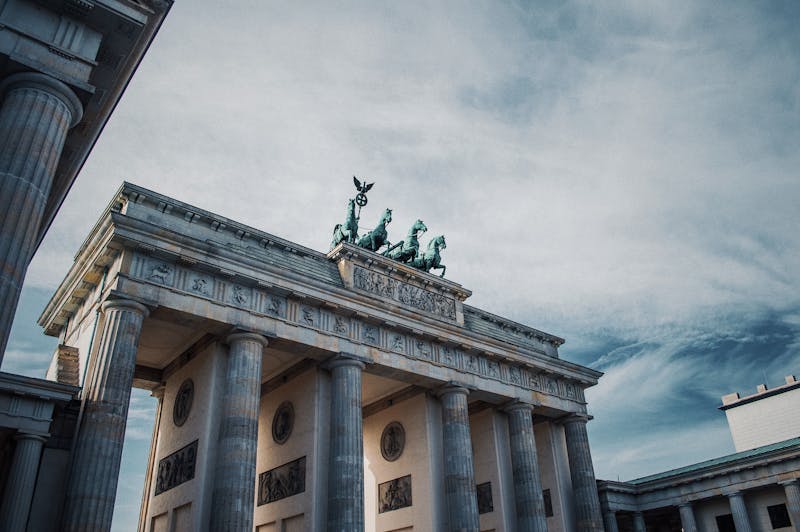
Brandenburg Gate — symbol of the city and of reunification, always accessible and free; beautifully lit at night. Reichstag — Norman Foster's glass dome can be visited free of charge with compulsory online registration, ideally a few days ahead. Museum Island — a UNESCO site with five museums: the Neues Museum holds the bust of Nefertiti (about €14), the Alte Nationalgalerie the German Romantics; the Pergamonmuseum is closed for a multi-year renovation. Fernsehturm — the TV tower on Alexanderplatz, 368 metres, viewing platform from about €25: book a time slot. East Side Gallery — 1.3 km of original Wall painted by artists from all over the world in 1990, along the Spree, free. Berlin Wall Memorial on Bernauer Straße — the only stretch with the death strip preserved, with a free documentation centre. Holocaust Memorial — 2,711 concrete stelae next to the Brandenburg Gate, open access. Charlottenburg Palace — baroque residence of the Hohenzollern with vast gardens, entry from about €12. Topographie des Terrors — documentary exhibition on Nazi terror on the site of the former Gestapo headquarters, free.
Suggested itineraries
1 day: morning at the Brandenburg Gate, Reichstag (dome booked ahead), Holocaust Memorial and Potsdamer Platz; quick currywurst lunch; afternoon on Museum Island (one museum only, the Neues) and Berlin Cathedral; evening at Alexanderplatz and dinner in Prenzlauer Berg. 2-3 days: to the first day add the Wall Memorial on Bernauer Straße and the East Side Gallery with a walk through Friedrichshain; then Checkpoint Charlie, Topographie des Terrors, Gendarmenmarkt and a night out between Kreuzberg and Neukölln. 5+ days: Charlottenburg Palace and Ku'damm, a second museum on the Island, the old Jewish quarter with the Hackesche Höfe, an afternoon in the Tiergarten or at the lakes (Wannsee, Müggelsee) and a day trip to Potsdam for the palaces of Sanssouci. Five days cover Berlin without rushing.
🍽️ Local cuisine
Hearty food, generous portions, honest prices. Currywurst: sausage with curry sauce, a kiosk institution (about €4-5) — Curry 36 in Kreuzberg and Konnopke's Imbiss under the elevated railway in Prenzlauer Berg are the historic names. Döner kebab: born in Berlin among Turkish immigrants in the Seventies; at Mustafa's Gemüse Kebap the queue tops an hour, but the kiosks of Kreuzberg and Neukölln are just as good as the original (€5-8). German dishes: Eisbein (pork knuckle), Königsberger Klopse (meatballs in caper sauce), Buletten, best tried in historic taverns such as Zur letzten Instanz, open since 1621. Sweets: the Berliner Pfannkuchen, a jam-filled doughnut. Kreuzberg's Markthalle Neun runs Street Food Thursday, and Berlin is one of Europe's vegan capitals. Beer everywhere: the Prater Garten (1837) is the city's oldest beer garden. A meal in a Kneipe runs €12-18, dinner in a mid-range restaurant €25-45 with beer.
Neighbourhoods to explore
Mitte: the historic heart — Brandenburg Gate, Museum Island, Unter den Linden; supremely convenient but the most expensive. Prenzlauer Berg: restored nineteenth-century buildings, cafés, families; the most classically handsome district. Kreuzberg: Turkish-alternative soul, street art, nightlife and the liveliest food scene. Friedrichshain: the East Side Gallery, the RAW-Gelände and the clubs — techno and nightlife. Neukölln: a former working-class fringe now creative, with young bars and lower rents. Charlottenburg: the bourgeois West — Ku'damm for shopping, the palace, the feel of old West Berlin. Schöneberg: the historic district of the LGBT community, local markets and residential streets. Potsdam (S-Bahn S7, about 40 minutes): the palaces of Sanssouci deserve a full day.
🎭 Events and festivals
February: the Berlinale, one of Europe's three great film festivals, with screenings open to the public. Whitsun weekend: Karneval der Kulturen, a multicultural parade through the streets of Kreuzberg. 21 June: Fête de la Musique, free concerts across the city. July: Christopher Street Day, Berlin's great Pride. August: Lange Nacht der Museen, dozens of museums open late into the night on a single ticket. Last Sunday of September: the Berlin Marathon, the fastest course in the world. October: Festival of Lights, monuments lit up with video projections. 9 November: commemorations of the fall of the Wall. December: Christmas markets on Gendarmenmarkt and in front of Charlottenburg Palace; on New Year's Eve a huge street party at the Brandenburg Gate.
How to get there
Berlin has a single airport: Berlin Brandenburg 'Willy Brandt' (BER), opened in 2020 about 25 km south-east of the centre, replacing Tegel and Schönefeld. From Italy there are direct flights with easyJet, Ryanair, ITA Airways, Wizz Air and Eurowings: from Rome Fiumicino about 2h10 (€40-150 return if booked in time), from Milan 1h50 (€35-130), from Naples 2h20, from Catania and Palermo 2h45-3h, from Venice and Bologna under two hours. Prices rise over holiday weekends, at Christmas and during the big trade fairs. In high season book 2-3 months ahead; in low season returns under €60 are common. The train from Italy is not a realistic alternative: over 12 hours with several changes.
🚇 Getting around
The BVG/S-Bahn network is dense: U-Bahn (nine lines, running all night on Fridays and Saturdays), S-Bahn, trams in the eastern districts and buses. Zone-based tickets: a single AB ride costs about €3.80, the AB day ticket about €10.50, and tickets must be validated before boarding (€60 fine). From BER airport: the FEX and RE8 regional trains reach the Hauptbahnhof in about half an hour, while the S9 and S45 S-Bahn lines cross the city with more stops; you need an ABC ticket, about €4.60. A taxi from BER to the centre runs €55-70. In town, taxi fares start at about €4.30; shared bikes (Nextbike) and e-scooters also work well. Avoid the car: scarce parking, traffic and an Umweltzone requiring an environmental sticker.
Budget and prices
Berlin remains cheaper than London, Paris or Amsterdam. Return flight from Italy €35-150 depending on season. Sleeping: hostel bed €20-40, 3-star hotel €70-140 in low season and €120-220 in high, 4-star from €130; in Neukölln and Wedding you spend 20-30% less than in Mitte. Add the city tax, about 7.5% of the room price. Eating: currywurst or döner €4-8, lunch €10-15, dinner in a mid-range restaurant €25-45 per person, half-litre beer €4-5. Museums: the Museum Island day card costs about €24, and many memorials are free; the Berlin WelcomeCard combines transport and discounts from about €26 for 48 hours. Transport: €10-25 for a weekend. Weekend total for a couple, flights excluded: €300-500 in low season, €450-750 in high.
📋 Practical info
Currency: euro. The language is German, but English is spoken almost everywhere; Italian much less. Cash: plenty of kiosks, Kneipen and even restaurants take no cards — always carry some. Tipping: round up or leave 5-10%, telling the waiter the total as you pay. Tap water is drinkable and good. Sockets type F, 230 V: standard European two-pin plugs work without an adapter. On Sundays shops are closed by law (the Spätis, the corner minimarkets, stay open). Pfand: bottles and cans carry a deposit of €0.08-0.25, refunded at supermarkets. Safety is good for a metropolis; watch for pickpockets at Alexanderplatz, on the U8 line and around the RAW-Gelände late at night. EU citizens: an identity card is enough, no visa; EU roaming carries no extra charges.
💡 Practical tips
Book the Reichstag dome online a few days ahead: it is free but the slots go quickly.
Always validate your BVG ticket before boarding: plain-clothes inspectors are frequent and the fine is €60.
On Sunday mornings head for the Mauerpark flea market, with afternoon karaoke in summer.
Several museums close on Mondays: plan Museum Island for the other days.
Döner: if the queue at Mustafa's is an hour long, the kiosks on Sonnenallee in Neukölln are just as good.
In summer pack a swimsuit: the Wannsee and Müggelsee lakes are the Berliners' beaches.
The sensible minimum is 3 days: the city is vast and the journeys alone eat up time. In three days you cover Mitte, the Wall sites and a couple of museums; with 4-5 you add Charlottenburg, districts such as Kreuzberg and Prenzlauer Berg and a trip to Potsdam. A two-day weekend still makes a good first taste.
May to September: long days, open beer gardens, a city lived outdoors. April and October offer a good balance of weather and prices. Winter is grey and cold but flights and hotels hit their lows, museums are half-empty and December brings the Christmas markets. Avoid Berlinale week and marathon week unless they are your reason to go.
Take the FEX or RE8 regional trains to the Hauptbahnhof in about half an hour, or the S9 and S45 S-Bahn lines, slower but stopping in several districts. You need an ABC ticket at about €4.60, validated before boarding. A taxi costs €55-70 and, with traffic, is no faster than the train.
Mitte is handy for the sights but expensive; Prenzlauer Berg is elegant and quiet; Kreuzberg and Friedrichshain are perfect for nightlife and restaurants; Neukölln and Wedding cost 20-30% less. More than the district, what matters is being near a U-Bahn or S-Bahn stop: on Berlin's network every neighbourhood is well connected.
Excluding flights, €300-500 in low season and €450-750 in high: a 3-star hotel at €80-180 a night, €50-90 a day for two to eat between kiosks and restaurants, €20-30 for transport, and museums with many free memorials. Among Western European capitals, Berlin remains one of the most affordable.
Yes: for a metropolis of almost four million people, crime against tourists is limited, and the areas around the monuments are calm even in the evening. Use the usual care at Alexanderplatz, on the U8 line and around the RAW-Gelände at night, and keep an eye on your wallet on crowded trains.
Street food first of all: currywurst and the döner kebab, which was born right here. Then robust German cooking — pork knuckle, Buletten meatballs, Königsberger Klopse — and a huge international scene, from Vietnamese to Levantine, with plenty of vegan spots. Finish with a Berliner Pfannkuchen and a beer in a historic beer garden.
This site uses third-party cookies — Google Analytics for visit statistics and functional cookies for the flight search engine. By clicking "Accept" you consent to the use of cookies. Cookie policy