🇬🇧
Flights and Hotels in Edinburgh
Edinburgh is a Gothic fairytale city. The castle towering over the volcanic rock, the medieval Royal Mile, underground pubs with whisky and the August Festival make it one of Europe's most fascinating capitals.
Edinburgh is a Gothic fairytale city. The castle towering over the volcanic rock, the medieval Royal Mile, underground pubs with whisky and the August Festival make it one of Europe's most fascinating capitals.
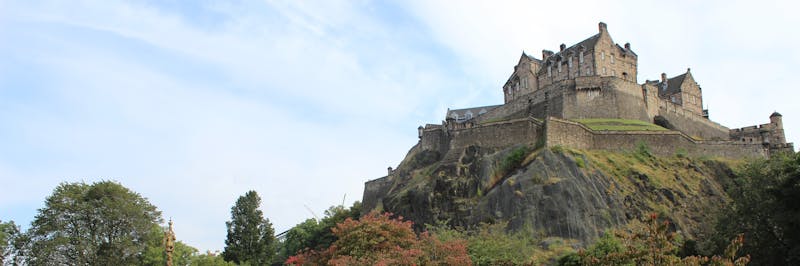
Edinburgh has two clearly defined historic cores: the medieval Old Town, built along the ridge from the Castle to Holyrood, and the Georgian New Town, ordered around Princes Street and Charlotte Square. The centre is compact but steep, with stairs, cobbles and narrow lanes known as closes; solid shoes matter more than map distance. In two days you can visit the Castle, Royal Mile, National Museum and Calton Hill; a third allows Arthur’s Seat, Stockbridge or Leith. The city shaped writers including Walter Scott, Robert Louis Stevenson and Arthur Conan Doyle; J. K. Rowling worked on the early Harry Potter books in city cafés. In August, the Fringe transforms whole districts and demands planning, while outside festival season a more everyday capital appears.
The volcanic Castle Rock offered a defensive position from early times, while the medieval settlement developed along the Royal Mile towards Holyrood Abbey. Edinburgh became Scotland’s political capital, and its castle held regalia, garrisons and prisoners. In 1566, the murder of David Rizzio at Holyroodhouse marked the troubled reign of Mary, Queen of Scots. The Union of the Crowns took James VI to London, while the Acts of Union joined the Scottish and English parliaments within Great Britain. In the eighteenth century, the overcrowded Old Town gained its Georgian counterpart, the New Town. The Scottish Enlightenment made Edinburgh a European centre of philosophy, medicine, science and economics associated with David Hume and Adam Smith. Railways, monuments and institutions strengthened the capital’s cultural role in the nineteenth century. Since the post-war period, international festivals and the Fringe have broadened its fame. The devolved Scottish Parliament now meets at the foot of the Royal Mile.
May to September brings long days and relatively mild temperatures, but rain and wind can arrive in any month. May and June often provide the best balance of light, greenery and visitor numbers. August is festival month: extraordinary atmosphere, expensive rooms, full restaurants and a congested centre; book well ahead. September remains pleasant and more manageable. From November to February, daylight is short, wind intensifies the cold and paths may be slippery, although museums and pubs make an urban visit rewarding. Hogmanay attracts large New Year crowds. Always pack waterproof layers, not just an umbrella, and leave enough flexibility to move Arthur’s Seat to the day with the clearest weather.
Edinburgh Castle — fortress on Castle Rock with the Honours of Scotland, St Margaret’s Chapel and military museums; advance booking advised. Royal Mile — Old Town spine between Castlehill and Holyrood, lined with closes and courts. St Giles’ Cathedral — historic church recognised by its crown spire. Palace of Holyroodhouse — royal residence with state apartments and ruined abbey; it may close for official duties. Arthur’s Seat — volcanic summit in Holyrood Park, exposed to wind and mud. National Museum of Scotland — Scottish, scientific and global collections, with extensive free galleries. Calton Hill — city panorama and neoclassical monuments. Scottish National Gallery — European and Scottish art in the centre. Dean Village — former milling settlement on the Water of Leith. Royal Yacht Britannia — museum ship at Leith, accessible by tram.
1 day: enter the Castle early, descend the Royal Mile via St Giles’, explore the National Museum and finish on Calton Hill; Holyrood adds a longer detour. 2-3 days: on the second morning climb Arthur’s Seat in suitable weather, then visit Holyroodhouse, the Scottish Parliament and Canongate; on day three cross New Town, Dean Village and Stockbridge, or take the tram to Leith and Britannia. 5+ days: add the Scottish National Gallery, Royal Botanic Garden, Water of Leith and Portobello. Use one day for South Queensferry and the Forth bridges, or take a train to Stirling or Glasgow. In August leave open slots for Fringe shows; in winter place outdoor activities in the central daylight hours.
Scottish cooking extends well beyond haggis. Haggis combines seasoned sheep offal and oats, often served with neeps and tatties, turnips and potatoes; vegetarian versions are common. Try Cullen skink, a smoked haddock soup, Scotch broth, salmon, game and filled pies. A full Scottish breakfast may include eggs, bacon, sausage, tattie scone, beans and black pudding. Fish and chips remains practical; cranachan, shortbread and sticky toffee pudding finish a meal. Leith concentrates contemporary restaurants and seafood, Stockbridge and New Town cafés and brunch, while Grassmarket and the Royal Mile have many visitor-oriented venues. A simple lunch costs around £10-18, a pub meal £16-25 and a mid-range dinner £30-50 per person. In whisky bars, order a dram with water on the side; expertise in producing regions is not required for a thoughtful tasting.
Old Town is central and dramatic, ideal for a first visit but steep, noisy and expensive, especially in August. New Town offers Georgian architecture, shopping and easy links, with mid-range and upscale hotels. West End is convenient for Haymarket and less crowded than the Royal Mile. Stockbridge combines cafés, shops and Water of Leith walks; quiet but not always cheap. Leith, the historic port reached by tram, suits restaurants and a more local stay. Southside and Newington have a university atmosphere and access to Holyrood Park. Bruntsfield and Morningside offer residential streets, independent businesses and frequent buses. During the Fringe, choose accommodation based on performance venues first, not merely distance from the Castle.
Hogmanay celebrates New Year with organised events and heavy accommodation demand. Spring brings science festivals and Easter traditions. Every August, the Edinburgh International Festival presents theatre, music, opera and dance; at the same time the Festival Fringe fills theatres, universities, pubs and temporary venues with thousands of performances. Book, film and art festivals run alongside it with changing annual programmes. The Royal Edinburgh Military Tattoo takes place on the Castle Esplanade and requires early booking. Storytelling and food events continue into autumn. St Andrew’s Day in late November honours Scotland’s patron saint. December brings lights, markets and seasonal shows. During the major festivals, walking is slower and rates rise: select events before your hotel and check the precise venues.
Edinburgh Airport EDI lies west of the city and is Scotland’s principal airport. Direct services normally operate from several Italian airports, particularly with Ryanair, easyJet and, depending on city and season, network airlines; from Milan, Rome, Venice or Naples, approximate flying time is 2 hours 30 minutes to 3 hours 15 minutes. Routes can be seasonal and prices rise sharply during festivals, holiday weekends and New Year, so compare baggage, departure airport and late-arrival transport. Glasgow GLA is a possible alternative but needs an intercity transfer and rarely suits a short Edinburgh break. Travellers already in Britain can arrive at Waverley or Haymarket by train; the fastest London-Edinburgh journeys take roughly four and a half hours.
Old Town and New Town are walkable, but slopes and stairs extend journey times. Lothian Buses runs a dense network; urban singles cost approximately £2-3 and the contactless daily cap around £5-7 when you use the same card. The tram links the airport, Haymarket, Princes Street, St Andrew Square, Leith and Newhaven. From EDI airport, it reaches the centre in about 30-35 minutes; an airport ticket is roughly £7-9. Airlink 100 serves Waverley Bridge in a similar time, depending on traffic, for around £5-7. Taxis and private-hire cars generally take 25-40 minutes and cost £25-40. Waverley is central but has several entrances and level changes; Haymarket suits West End. Arthur’s Seat needs proper footwear: it is not a paved urban stroll. A car is inconvenient because of parking and one-way streets.
Edinburgh is expensive, particularly in August and at Hogmanay. Accommodation: hostel bed around £30-60, budget double £90-150, mid-range hotel £140-250; festival dates can push the same rooms far beyond these bands. Food: breakfast or snack £6-12, simple lunch £10-18, pub meal £16-25 and mid-range dinner £30-50 per person; a dram of whisky starts near £5-8. Transport: a keen walker may spend £5-8 daily, plus the airport transfer. The Castle, Holyroodhouse, Britannia and paid tours can bring three-day admission costs to £60-120, while free national museums balance the budget. Excluding accommodation, allow about £55-85 per day on a careful budget and £100-160 mid-range. Early cancellable bookings are especially valuable for August.
The currency is the pound sterling (£, GBP); Scottish banknotes are valid across the UK, although some businesses outside Scotland may not immediately recognise them. English is spoken, with Scots and Gaelic part of the cultural heritage. Sockets are type G, 230V, so Italian travellers need an adapter. Tap water is safe to drink. The UK is outside the EU and Schengen: EU citizens must check the required travel document and any electronic authorisation before departure, as rules can change. EU roaming is not guaranteed and depends on the provider. Tipping is optional; 10-12.5% is common in restaurants if service is not already included. Edinburgh is safe overall, but watch belongings and alcohol consumption in nightlife areas. For fast-changing weather, pack waterproofs, layers and shoes with good grip.
This site uses third-party cookies — Google Analytics for visit statistics and functional cookies for the flight search engine. By clicking "Accept" you consent to the use of cookies. Cookie policy