🇲🇽
Flights and Hotels in Cancún
Cancún is the gateway to the Mexican Caribbean: 22 kilometres of white sand along the Hotel Zone, turquoise sea, Maya ruins and cenotes an hour away. Here is how to plan the trip.
Cancún is the gateway to the Mexican Caribbean: 22 kilometres of white sand along the Hotel Zone, turquoise sea, Maya ruins and cenotes an hour away. Here is how to plan the trip.
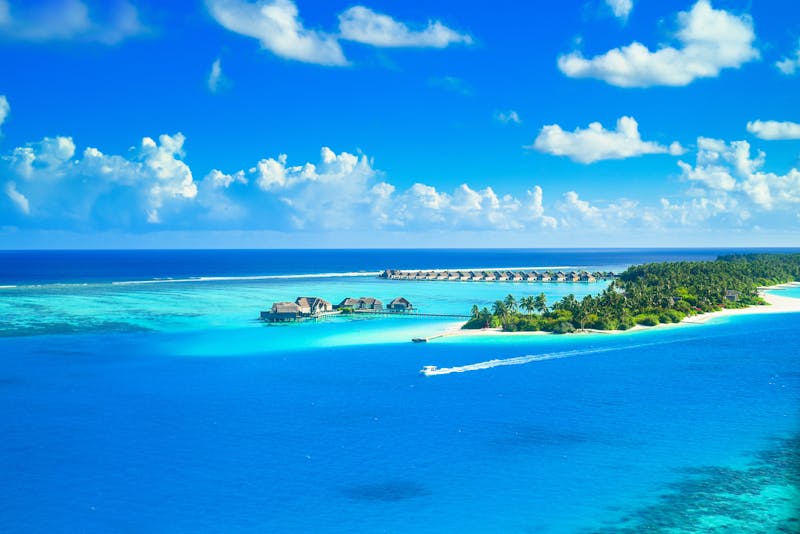
Cancún is two cities in one: the Hotel Zone, a 7-shaped island roughly 22 km long with resorts, beaches and nightlife strung along Boulevard Kukulcán, and El Centro on the mainland, where locals live and you eat well for a third of the price. Distances matter: downtown to Playa Delfines takes 40-50 minutes on the R1 bus. The sea is why you come, but the real wealth lies in the surroundings: Isla Mujeres, the cenotes of Puerto Morelos, Tulum, Chichén Itzá. Allow at least 5 days: 2-3 for beaches and 2-3 for excursions. The sun is fierce all year round: hat, reef-safe sunscreen and a bottle of water always in your bag.
Until 1970 Cancún was a near-uninhabited strip of sand between dunes and mangroves, with a fishing village at Puerto Juárez. The Mexican government, through Banco de México and later FONATUR, picked it on the drawing board as the country's flagship resort: city and hotel strip were planned from scratch, and the first hotels opened in the seventies. Today the municipality has over 900,000 inhabitants and the airport is Mexico's second busiest: the gamble paid off, with the environmental costs that come with it. The deeper history, though, is Maya: this coast belonged to the province of Ekab, and the sites of El Rey, right in the Hotel Zone, and El Meco, towards Punta Sam, were stops on the maritime trade linked to Isla Mujeres and Cozumel. Inland flourished Chichén Itzá, powerful between the 9th and 12th centuries, and Cobá; down the coast, to the south, the walled city of Tulum. Hurricanes Gilbert (1988) and Wilma (2005) devastated Cancún, which was rebuilt at record speed both times.
The dry season runs from December to April: 24-30°C, bearable humidity, calm seas — but also peak prices, especially between Christmas and Easter and during March Spring Break, when American students pour in. May-June and October-November are the smart months: hot and humid, but rates drop by 30-40%. Hurricane season runs from June to November, peaking in September-October: it does not mean certain storms, rather afternoon downpours — cancellation insurance is wise. Between April and August sargassum, the brown seaweed that fouls some beaches, can appear: webcams and local bulletins help you pick the right stretch. The water stays at 26-29°C all year round.
Playa Delfines — the most scenic public beach, with the mirador and Cancún's colourful sign; no hotels behind it, lively surf, free parking. Museo Maya de Cancún — in the Hotel Zone, about 100 pesos: finds from across the peninsula plus, included in the ticket, the San Miguelito site amid the greenery. El Rey — Maya ruins at km 18 of Boulevard Kukulcán, about 65 pesos, iguanas everywhere. MUSA — an underwater museum with hundreds of submerged sculptures between Cancún and Isla Mujeres, visited by snorkel or dive, tours from about 900 pesos. Nichupté Lagoon — mangroves, boat trips and sunsets on the side facing away from the sea. Isla Mujeres — Ultramar ferry from Puerto Juárez in 15-20 minutes: Playa Norte ranks among the Caribbean's finest beaches. Chichén Itzá — the Kukulcán pyramid, a UNESCO site, about 200 km away; entry around 650 pesos. Tulum — the only fortified Maya city by the sea, 130 km south.
1 day: morning at Playa Delfines and the El Rey ruins, lunch downtown at Las Palapas, afternoon at the Museo Maya and sunset over Nichupté Lagoon, evening on Avenida Yaxchilán. 2-3 days: add a full day on Isla Mujeres (Playa Norte, the southern tip with the little Ixchel temple, a golf cart) and one split between snorkelling at MUSA and the cenotes of Puerto Morelos' Ruta de los Cenotes. 5+ days: a trip to Chichén Itzá with a stop in Valladolid and a swim in a cenote; a day in Tulum (seaside ruins plus beach); possibly Holbox for the flamingoes or, from June to September, snorkelling with whale sharks. Alternate one excursion day and one beach day: the heat takes its toll.
The food is Yucatecan and coastal Mexican. Cochinita pibil, pork marinated in achiote and slow-cooked, served in tacos or tortas; sopa de lima, turkey and lime broth; panuchos and salbutes, fried tortillas with chicken and red onion; tikin xic, achiote fish grilled in banana leaf; ultra-fresh ceviche and aguachile; tacos al pastor for the evening. Street dessert: the marquesita, a crisp crêpe with ball cheese and Nutella. In the Hotel Zone prices are Miami-level (600-1,000 pesos for dinner); downtown you eat for 150-300 pesos at Parque de las Palapas, Mercado 28 or the taquerías of Avenida Yaxchilán. Light local beers (Sol, Dos Equis), micheladas, mezcal and margaritas everywhere. Mind the heat: the habanero salsas served on the side show no mercy.
Hotel Zone: the sandy 7 along Boulevard Kukulcán — beachfront resorts, shopping malls, nightlife around km 9-10 (Coco Bongo and neighbours); convenient but pricey and artificial. El Centro: the real city around Avenida Tulum, with Parque de las Palapas, the markets and the budget hotels; from here the R1 bus reaches the beach in 20-40 minutes. Puerto Juárez / Punta Sam: the ferry docks for Isla Mujeres. Puerto Cancún: a marina and recent mall between downtown and the hotel strip. Playa Mujeres, to the north: new resorts and beaches free of sargassum. For small-town atmosphere, Puerto Morelos, 35 km south, with its protected coral reef.
February: Carnaval de Cancún, floats and music between downtown and Playa Delfines. Spring equinox (around 21 March): at Chichén Itzá the serpent of light and shadow slides down the Kukulcán staircase — huge crowds, but a unique experience; it repeats in September. March: Spring Break, when the Hotel Zone fills with North American students — worth knowing, for better or worse. June-September: whale shark season off Isla Mujeres and Holbox. 15-16 September: Independence celebrations with the Grito, fireworks and street parties downtown. 1-2 November: Día de Muertos, altars and celebrations; Xcaret hosts the Festival de Tradiciones de Vida y Muerte. November: Riviera Maya Jazz Festival in Playa del Carmen, free, on the beach.
Cancún International Airport (CUN), 16 km southwest of downtown, is Mexico's second busiest, with four terminals. From Italy, Neos flies direct from Milan Malpensa (seasonal, about 11 hours); everything else connects: Iberia and Air Europa via Madrid, Air France via Paris, Lufthansa/Discover via Frankfurt, KLM via Amsterdam, or US carriers via Atlanta, Dallas or New York (ESTA required even for a simple transit). Typical journey time with a stop: 14-17 hours from Milan or Rome. Indicative return fares: €600-850 in low season, €900-1,400 between December and Easter. Charters and flight+resort packages can cost less than a scheduled flight alone.
In town the R1 and R2 buses are all you need: they run the length of Boulevard Kukulcán into downtown, pass every few minutes at any hour and cost about 15 pesos per ride (pay the driver, coins preferred). From the airport: the ADO bus reaches downtown (Avenida Tulum) in about 30 minutes for 130-150 pesos; for the Hotel Zone you need a shared transfer (about 350-500 pesos) or an authorised fixed-rate zone taxi (600-900 pesos). Uber works, but with a history of friction with taxi drivers: judge case by case. For Playa del Carmen and Tulum, frequent ADO buses (100-250 pesos) or cheap colectivos. Ultramar ferry to Isla Mujeres from Puerto Juárez, about 300 pesos return. A rental car is only worthwhile for cenotes and Maya sites.
Return flight from Italy €600-850 in low season, €900-1,400 in high. Sleeping: downtown hostels 300-500 pesos per bed; 3-star downtown hotels 800-1,500 pesos; 4-star Hotel Zone resorts from 2,500-4,500 pesos per room; top-end all-inclusives exceed 6,000-8,000 pesos a night for two. Eating: street tacos 20-40 pesos apiece, a meal in a fonda 120-250 pesos, tourist dinner in the Hotel Zone 600-1,000 pesos, cocktails 150-250 pesos. Transport: city buses 15 pesos, a week of R1 rides under 200 pesos. Excursions: Chichén Itzá on a tour 1,200-1,800 pesos, Isla Mujeres independently 400-600 pesos, Xcaret/Xel-Há parks 2,000-3,000 pesos. A week for two, flights excluded: 25,000-40,000 pesos (€1,300-2,100) on a downtown-plus-excursions formula, far more on an all-inclusive basis.
Currency: the Mexican peso (MXN); US dollars are accepted everywhere but at poor rates — pay in pesos and withdraw at bank ATMs (BBVA, Banorte), declining dynamic currency conversion. Spanish is the language; English is ubiquitous in tourist areas. Sockets are type A/B at 127V: bring an adapter. Tap water is not drinkable: bottled or filtered only; the ice in bars and restaurants causes no problems. Tipping is expected: 10-15% in restaurants (check it is not already on the bill as propina), 20-50 pesos for porters and beach waiters. Safety: tourist areas are well patrolled; common sense downtown at night and never buy drugs. SIM: prepaid Telcel with data from about 200 pesos; EU roaming does not cover Mexico. EU citizens: no visa for up to 180 days, just a valid passport and the entry form.
This site uses third-party cookies — Google Analytics for visit statistics and functional cookies for the flight search engine. By clicking "Accept" you consent to the use of cookies. Cookie policy