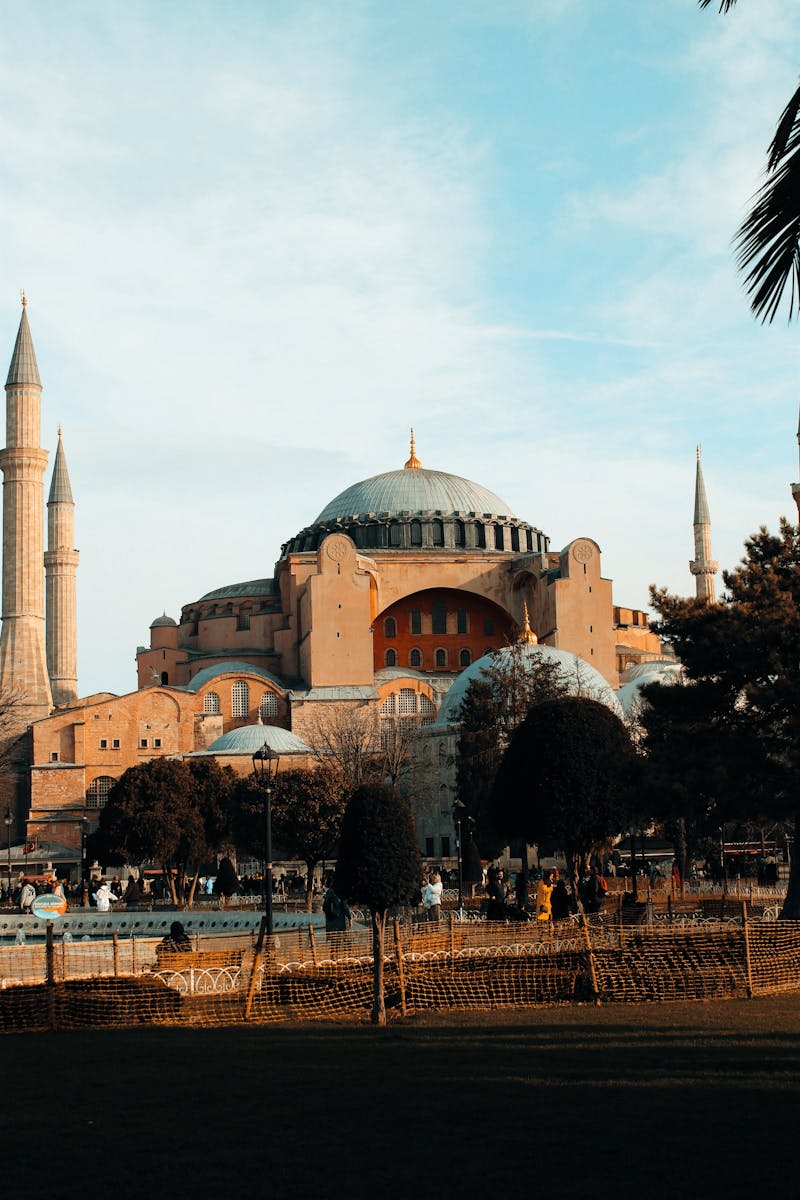
Istanbul is the only metropolis across two continents: Ottoman minarets, Byzantine mosaics and Bosphorus ferries coexist with bazaars, meyhanes and creative districts. Here are flights, areas to stay, costs and tips for planning your trip.
Istanbul is enormous — around 16 million inhabitants on two continents — yet the tourist core is compact: Sultanahmet (Hagia Sophia, Blue Mosque, Topkapi, Basilica Cistern) can be covered on foot in one full day. The Golden Horn separates the old city from Beyoğlu (Galata, İstiklal, Taksim), reached by the T1 tram or by walking across the Galata Bridge; the Asian shore (Kadıköy, Üsküdar) is 20-25 minutes away by ferry. Distances are deceptive: traffic is among the worst in Europe, so move around by tram, metro and ferry rather than taxi. You need at least three days: one for Sultanahmet, one for the bazaars and the Bosphorus, one for Beyoğlu and the Asian side. On Fridays around midday the mosques close to visitors for a long stretch during communal prayer.
📜 History at a glance
Byzantium was founded around the 7th century BC as a Greek colony from Megara, on a strategic promontory between the Sea of Marmara and the Golden Horn. In 330 AD Constantine refounded it as the capital of the Eastern Roman Empire: Constantinople. For almost a thousand years it was the richest city in Europe; Justinian raised Hagia Sophia there in 537, for nine centuries the largest cathedral in the world. Sacked by the Crusaders in 1204, it never fully recovered: in 1453 the twenty-one-year-old Mehmet II took it after a seven-week siege and made it the Ottoman capital, repopulating it with Greeks, Armenians and Sephardic Jews. In the sixteenth century, under Suleiman the Magnificent, the architect Sinan designed the mosques that still dominate the skyline. The empire declined slowly between the nineteenth century and the Great War; in 1923 Atatürk founded the Republic and moved the capital to Ankara, and since 1930 the official name has been Istanbul. Today the city remains Turkey's economic and cultural capital: the only major metropolis in the world straddling Europe and Asia.
📅 Best time to visit
The ideal months are April-May and September-October: 15-25°C, splendid light and, in April, millions of tulips in the parks. Summer is hot and humid (28-33°C, peaks above 35) and the queues at Hagia Sophia and Topkapi grow long; on the other hand, evenings on the Bosphorus are magnificent. Winter is cold and rainy (3-10°C), with occasional snowfalls that transform Sultanahmet: hotels drop by 30-40% and museums are half empty. Watch out for Ramadan and the religious holidays (Şeker Bayramı and Kurban Bayramı, movable dates): the city remains perfectly visitable and the evenings are lively, but transport fills up with domestic travellers and some restaurants scale back daytime service. On Fridays the mosques stay closed for a long time for midday prayer.
Why visit Istanbul
Hagia SophiaBlue MosqueTopkapi PalaceBasilica CisternGrand BazaarSpice BazaarSüleymaniye MosqueGalata Towerİstiklal Caddesi and TaksimDolmabahçe Palacea cruise along the BosphorusBalat and Fenerthe Kariye Mosque (Chora Church)Kadıköy and ModaOrtaköyPrinces' Islands
Hagia Sophia — Justinian's masterpiece of 537, basilica then mosque, museum and mosque once again: tourists visit the upper gallery with its Byzantine mosaics (around €25), worshippers enter the prayer floor for free. Blue Mosque (Sultanahmet Camii) — seventeenth-century, six minarets and over 20,000 İznik tiles; free outside prayer times. Topkapi Palace — residence of the sultans for four centuries: courtyards, Treasury, relics and Harem, combined ticket around €50; allow half a day, closed on Tuesdays. Basilica Cistern — an underground forest of 336 columns with the upside-down Medusa heads, around €20-25. Grand Bazaar — since 1461, roughly 4,000 shops along dozens of covered streets; free entry, closed on Sundays. Süleymaniye Mosque — Sinan's masterpiece on the third hill, free and far quieter than the Blue Mosque, with a terrace over the Golden Horn. Galata Tower — a fourteenth-century Genoese watchtower with a 360° panorama (around €25-30). Dolmabahçe Palace — the «European» Ottoman palace on the Bosphorus, with monumental crystal chandeliers; around €30-40, closed on Mondays.
Suggested itineraries
1 day: Hagia Sophia at opening, Blue Mosque, Basilica Cistern, lunch at a köfteci, then Topkapi Palace limited to the courtyards and Treasury, sunset from the Galata Tower after walking across the bridge. 2-3 days: day one as above but with Topkapi including the Harem; day two Süleymaniye, Grand Bazaar, Spice Bazaar and a Bosphorus ferry in the afternoon, evening among the meyhanes of Beyoğlu; day three Balat and Fener in the morning, then Kadıköy and Moda by ferry. 5+ days: add Dolmabahçe and Ortaköy, the Kariye Mosque with its Byzantine mosaics, a day on the Princes' Islands (ferry from Kabataş or Kadıköy), a historic hammam and Üsküdar with the climb up Çamlıca hill for the widest view over the city.
🍽️ Local cuisine
Start with kahvaltı, the Turkish breakfast: cheeses, olives, honey with kaymak, menemen (eggs scrambled with tomato) and endless black tea. For lunch, street food: sesame simit, balık ekmek (grilled mackerel sandwich) on the Eminönü quays, midye dolma (mussels stuffed with rice), döner and dürüm at around 100-200 lira (€3-5). In the lokanta you choose from the counter: köfte, İskender kebap, mantı (yoghurt-dressed dumplings), pide and lahmacun. In the evening the institution is the meyhane: cold and hot meze, fish and aniseed rakı in the Nevizade lanes of Beyoğlu or in Kadıköy. Desserts: baklava from Karaköy Güllüoğlu, warm künefe, lokum and Turkish coffee, a UNESCO-listed tradition. Historic addresses: Pandeli (since 1901 above the Spice Bazaar), Hacı Abdullah, Çiya Sofrası in Kadıköy. Avoid: restaurants with touts in Sultanahmet and fish without a displayed price — have your portion weighed and quoted before ordering.
Neighbourhoods to explore
Sultanahmet: the old city with the major monuments; extremely convenient but very touristy, and it empties in the evening. Sirkeci-Eminönü: ferry quays and the Spice Bazaar, a good compromise for sleeping. Beyoğlu-Galata-Karaköy: the modern soul — İstiklal Caddesi, galleries, cafés and nightlife; Karaköy is the most creative patch. Cihangir: bohemian and residential, excellent brunches. Beşiktaş and Ortaköy: waterfront, fish market and the photogenic mosque beneath the Bosphorus bridge. Nişantaşı: elegant shopping. Balat and Fener: coloured houses, synagogues and Greek churches on the Golden Horn, perfect in the morning. Kadıköy-Moda: the Asian shore of markets and small bars, the most authentic. Princes' Islands: pines, Art Nouveau villas and no cars.
🎭 Events and festivals
April: Tulip Festival, millions of bulbs in bloom in Emirgan Park and the flowerbeds of Sultanahmet, plus the Istanbul Film Festival in the cinemas of Beyoğlu. June: Istanbul Music Festival, classical music in historic courtyards and churches. July: Bosphorus Cross-Continental, the swimming race from Asia to Europe with the strait closed to shipping. September-November, odd-numbered years: the contemporary art Biennial spread across the city. 29 October: Republic Day, fireworks over the Bosphorus. Early November: Istanbul Marathon, the only one in the world run on two continents, starting on the intercontinental bridge and open to walkers too. Ramadan, movable dates: communal iftars and illuminated inscriptions between the minarets, a unique atmosphere in Sultanahmet; then comes Şeker Bayramı, three days of celebration and offered sweets.
How to get there
Istanbul has two airports. Istanbul Airport (IST), on the European side about 40 km from the centre, is the Turkish Airlines hub: direct flights from Rome Fiumicino, Milan Malpensa, Venice, Bologna, Naples and Catania, plus ITA Airways from Fiumicino and Wizz Air from selected airports. Indicative flight times: from Rome 2h20-2h40, from Milan 2h50-3h, from Naples or Catania 2h-2h30. Typical return fares €90-250, under €100 in low season with the low-cost carriers. Sabiha Gökçen (SAW), on the Asian side about 45 km from the centre, is the base of Pegasus and AJet: fares often €30-60 lower from the same Italian airports, but with a longer transfer to Sultanahmet. If you are staying in Kadıköy or Moda, SAW is actually the more convenient of the two.
🚇 Getting around
Everything revolves around the Istanbulkart, a rechargeable card valid on trams, metro, ferries and buses: a ride costs roughly €0.60-0.90. The T1 tram crosses Sultanahmet from Kabataş to the Grand Bazaar; the M2 metro serves Şişhane and Taksim; the Marmaray passes beneath the Bosphorus in four minutes; the Şehir Hatları ferries (Eminönü-Kadıköy in 20-25 minutes) are the city's loveliest transport, along with the historic Tünel of 1875 and the F1 funicular to Taksim. From IST: M11 metro to Gayrettepe with a change to the M2 (50-60 minutes in total), or a Havaist bus to Taksim or Sultanahmet (60-90 minutes, around €4-6); taxi roughly €35-50. From SAW: M4 metro to Kadıköy (about an hour), Havabus to Taksim (around €5, 90 minutes), taxi roughly €40-60. In taxis use the BiTaksi app and insist on the meter: surface traffic is ferocious at rush hour.
Budget and prices
Return flight from Italy €90-250, under €100 in low season with Pegasus or Wizz Air, over €300 around the holidays. Hotels: hostel bed €12-25; 3-star in Sultanahmet or Beyoğlu €50-100 per night; 4-star €90-180; boutique hotels with a Bosphorus view from €200 upwards. Meals: street food €3-6, lunch in a lokanta €8-15, dinner in a meyhane with meze and rakı €20-35 per person, high-end restaurants from €60. Attractions: around €100-140 per person for three full days (Hagia Sophia ~€25, Topkapi with Harem ~€50, Cistern ~€22, Galata ~€28); the mosques are free. Transport: with the Istanbulkart, €10-15 covers a generous week of rides. Historic hammam: €40-90 with scrub and massage. Weekend total for a couple (flights excluded): €300-500 in the budget-to-mid range, €600-900 with a boutique hotel and fish dinners.
📋 Practical info
Currency: the Turkish lira (TRY); inflation is high and lira prices change often, so it is easier to think in euros. Cards are accepted almost everywhere, but keep cash for bazaars and taxis. The language is Turkish, with English widespread in tourist areas. Entry for Italian citizens: no visa is needed for tourism up to 90 days; a passport or an ID card valid for travel abroad with adequate remaining validity is enough — still check the current conditions on official government travel advice before departure. Sockets: type F, 220V; standard European two-pin plugs fit without an adapter. Tap water: better to stick to bottled. Mosques: shoulders and legs covered, headscarf for women, shoes carried in hand. Tipping: 5-10% is appreciated. SIM: Turkey sits outside EU roaming, so an eSIM or a local SIM is worthwhile. Beware the classic Taksim scams: shoe-shiners and strangers inviting you for a drink.
💡 Practical tips
Get an Istanbulkart as soon as you arrive: one card for trams, metro and ferries, shareable between two people.
Hagia Sophia and the Blue Mosque before 9am: the organised groups arrive mid-morning.
On Fridays avoid the mosques in the middle of the day: communal prayer.
Low-cost Bosphorus: the scheduled Eminönü-Kadıköy ferry at sunset is almost a cruise in itself.
Always haggle in the Grand Bazaar: start by offering 40-50% less.
Taxis only with the BiTaksi app and the meter running.
Balat early in the morning to photograph the coloured houses without the crowds.
Three days is the sensible minimum: one for Sultanahmet, one for the bazaars and the Bosphorus, one for Beyoğlu and the Asian side. With four or five days you can also fit in Balat, Dolmabahçe and a hammam without rushing; a week adds the Princes' Islands and gives the city a more human rhythm.
IST is on the European side, has more flights from Italy (Turkish Airlines, ITA Airways) and fast links to the centre via the M11 metro or Havaist buses. SAW, on the Asian side, is the low-cost base of Pegasus and AJet: tickets are often cheaper, but the transfer to Sultanahmet is longer — handy though if you stay in Kadıköy.
No: for tourism up to 90 days in any 180, Italian citizens enter without a visa, using a passport or an ID card valid for travel abroad, provided it has sufficient remaining validity. Rules can change: check the Turkey page of your government's travel advice shortly before departure.
Yes, with the precautions of any large metropolis: pickpockets on the T1 tram, in the Grand Bazaar and on İstiklal, and well-rehearsed Taksim scams such as the shoe-shiner or the stranger inviting you into a bar. Tourist areas are well policed; avoid crowds and demonstrations. At night the central districts stay lively and busy.
For a couple, flights excluded, €300-500 if you stick to 3-star hotels, lokantas and street food; €600-900 with a boutique hotel, a meyhane every evening and a historic hammam. Tickets add up: Hagia Sophia, Topkapi and the Cistern together already come to about €100 per person. The flight, booked in good time, can drop below €120.
Shoulders and knees covered for everyone, a headscarf for women (often lent at the entrance), and shoes taken off and carried with you in a bag. Entry is free; avoid the five daily prayer times and in particular Friday midday. Photography is allowed, with discretion towards worshippers.
A full kahvaltı in a café in Cihangir or Moda, balık ekmek on the Eminönü quays, meze with rakı in a meyhane, warm künefe and baklava from Karaköy. Finish with a Turkish coffee, perhaps with your fortune read in the grounds, and tea in tulip-shaped glasses.
This site uses third-party cookies — Google Analytics for visit statistics and functional cookies for the flight search engine. By clicking "Accept" you consent to the use of cookies. Cookie policy