🇵🇹
Flights and Hotels in Lisbon
Seven hills overlooking the Tagus, yellow trams, azulejos and pastéis de nata: Lisbon combines faded charm and Atlantic light with prices that remain among the most affordable of Europe's capitals.
Seven hills overlooking the Tagus, yellow trams, azulejos and pastéis de nata: Lisbon combines faded charm and Atlantic light with prices that remain among the most affordable of Europe's capitals.
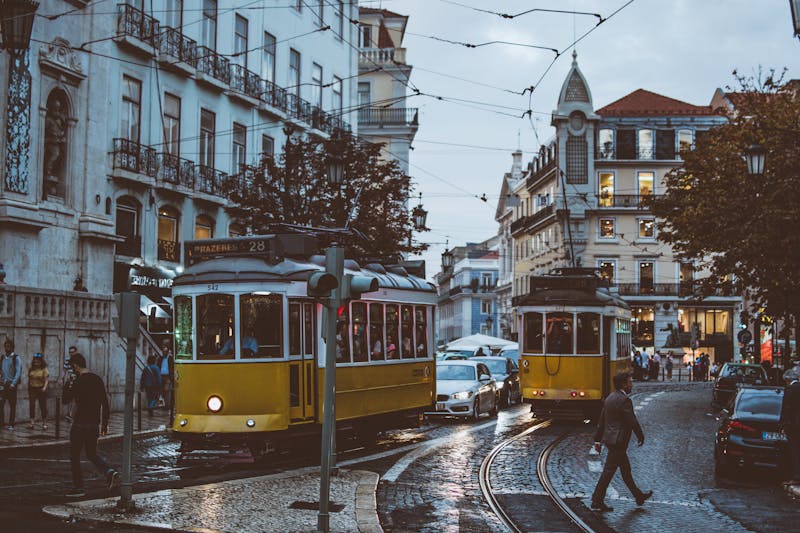
Lisbon is built on seven hills: distances on the map are deceptive, because between Baixa and the Castelo de São Jorge lie steep climbs over slippery cobblestones (the calçada portuguesa). The centre — Baixa, Chiado, Alfama, Bairro Alto — can be covered on foot in two full days, but Belém is 6 km away (tram 15 or train) and deserves half a day. Tram 28 crosses the historic quarters and is an attraction in itself: catch it early in the morning from Martim Moniz to avoid crowds and pickpockets. Three days cover the city and Belém; a fourth almost inevitably goes to Sintra. From June to September the sun beats down, but the Atlantic breeze makes the heat easier to bear than in Madrid or Rome.
Lisbon is among Europe's oldest capitals: a Phoenician trading post, then Roman Olisipo, it was a Moorish city for four centuries until Afonso I of Portugal reconquered it in 1147 with the help of crusaders. The golden age came with the Discoveries: Vasco da Gama sailed from Belém in 1497 towards India, and the wealth from spices and gold financed the Manueline Gothic of the Jerónimos and the Torre de Belém. On 1 November 1755 an earthquake followed by a tsunami and fires razed the lower town: the Marquis of Pombal rebuilt it on the rational grid of the Baixa Pombalina, among the world's first examples of anti-seismic town planning. In the twentieth century Lisbon was the capital of Salazar's long dictatorship (Estado Novo, 1933-1974) and an escape port for thousands of refugees during the Second World War. The Carnation Revolution of 25 April 1974 restored democracy almost without bloodshed; Expo '98 regenerated the eastern district, today's Parque das Nações, with the Vasco da Gama bridge stretching over 12 km.
The best months are April-June and September-October: 18-27°C, luminous days, crowds still manageable. June is the month of the Festas de Lisboa: the city smells of grilled sardines, but prices rise and Alfama is packed. July and August are hot (30-35°C at midday) yet rarely muggy thanks to the Atlantic; you will need a jumper in the evening. Winter is mild (8-15°C) and intermittently rainy: between November and February hotels cost 30-40% less and the miradouros deliver crisp sunsets. If possible, avoid the Easter holidays and Web Summit week (November), when room rates double. At the beaches of Cascais and Caparica the water stays cold even at the height of summer: 17-19°C.
Jerónimos Monastery — Manueline masterpiece in Belém, extraordinary cloister and the tomb of Vasco da Gama; tickets around €12-18, long queues: book online and arrive at opening time. Torre de Belém — sixteenth-century fortress on the Tagus and symbol of the city; around €8-15, bare interiors: the outside view is often enough. Castelo de São Jorge — Moorish walls and the best view over Baixa; around €15, peacocks included. Praça do Comércio — the great Pombaline square open to the river, with the climbable Arco da Rua Augusta for a few euros. Santa Justa Lift — neo-Gothic iron elevator from 1902; the terrace can also be reached free of charge from Largo do Carmo. Lisbon Cathedral (Sé) — twelfth-century Romanesque cathedral at the entrance to Alfama. Oceanário — in Parque das Nações, among Europe's finest aquariums, around €25, perfect with children. National Azulejo Museum — the story of the Portuguese tile in a sixteenth-century convent, around €10.
1 day: morning in Baixa and up to the Castelo de São Jorge, down through Alfama (Sé, Miradouro de Santa Luzia), lunch in a tasca; afternoon in Chiado and Bairro Alto, sunset at the Miradouro de São Pedro de Alcântara, dinner with fado in Alfama. 2-3 days: day 2 in Belém — Jerónimos at opening, the Tower, Padrão dos Descobrimentos, MAAT and pastéis — with the evening at Cais do Sodré; day 3 tram 28 at dawn, the Azulejo Museum or the Gulbenkian Foundation, LX Factory and the ferry to Cacilhas for the view of the Ponte 25 de Abril at sunset. 5+ days: a full day in Sintra (Palácio da Pena, Quinta da Regaleira), an afternoon in Cascais with the coast out to Cabo da Roca, the Oceanário at Parque das Nações and a beach day at Costa da Caparica, or a trip to Óbidos.
Atlantic, working-class cooking with generous portions. Salt cod in a thousand versions: à brás (shredded with eggs and potatoes) or com natas (baked in cream). Sardinhas assadas chargrilled, the queens of June. Polvo à lagareiro (oven-roasted octopus with olive oil and garlic), amêijoas à Bulhão Pato (clams with garlic and coriander), arroz de marisco. The national sandwich is the bifana of marinated pork (€3-5); Cervejaria Ramiro is the place for prawns and sapateira crab. Pastel de nata: at the Pastéis de Belém bakery (since 1837, secret recipe, around €1.50) or at Manteigaria in Chiado, served warm with cinnamon. To drink: vinho verde, Alentejo reds and a glass of ginjinha (sour-cherry liqueur, around €1.50) at the A Ginjinha kiosk next to Rossio. The Time Out Market at Cais do Sodré gathers well-known chefs in a covered market. Lunch with a prato do dia €9-13, dinner in a tasca €20-35, marisqueira €40-60.
Baixa and Chiado: the Pombaline grid between Rossio and the river, shops and historic cafés (A Brasileira), a convenient base for everything. Alfama: the Moorish labyrinth below the castle, washing lines and fado houses; best wandered without a map. Bairro Alto: sleepy by day, one bar after another from 10 pm. Príncipe Real: elegance, concept stores and gardens, excellent for sleeping. Mouraria and Graça: authentic and multi-ethnic, with the Senhora do Monte and Graça viewpoints. Cais do Sodré: Pink Street and the Time Out Market, young nightlife. Belém (6 km west): the monuments of the Discoveries and the museums, tram 15. Parque das Nações: modern post-Expo district, the Oceanário and a riverside promenade.
12-13 June: Santo António, the longest night of the year — marchas populares along Avenida da Liberdade, chargrilled sardines and dancing in every square of Alfama; the whole month is one long party with the Festas de Lisboa. February-March: Carnival, celebrated more intensely in nearby Torres Vedras. March: Lisbon Half Marathon, crossing the Ponte 25 de Abril. June, even years: Rock in Rio Lisboa in the Parque da Bela Vista. July: NOS Alive in Algés, among Europe's best rock festivals. August: Jazz em Agosto in the gardens of the Gulbenkian Foundation. November: Web Summit, tens of thousands of attendees and sky-high hotel rates. December-January: lights in Baixa and New Year's Eve fireworks over the Tagus in front of Praça do Comércio.
Humberto Delgado airport (LIS) is only 7 km from the centre, practically inside the city. From Italy there are direct flights with TAP Air Portugal, ITA Airways, Ryanair and easyJet from Rome, Milan, Venice, Bologna and Naples: roughly 2h40 from Milan, 3h from Rome, 3h15 from Venice. Indicative return fares: €50-130 in low season with the low-cost carriers, €120-250 in summer and over holiday weekends; TAP is often competitive with luggage included and offers a free stopover in Lisbon for those continuing to Madeira, the Azores or the Americas. There is no practical rail alternative from Italy: flying is the only realistic option. For Porto or the Algarve, Alfa Pendular trains from Oriente station.
The centre is walkable, but the hills wear you out: metro, trams and public lifts help. Viva Viagem card (€0.50), topped up in zapping mode: a metro/tram/bus ride costs around €1.80, the 24-hour pass around €7 and also covers funiculars and ferries. Metro: 4 lines (azul, amarela, verde, vermelha), clean and efficient. Trams: the 28 for the historic quarters, the 15 for Belém. The funiculars Glória, Bica and Lavra and the Santa Justa Lift are included in the day pass. From the airport: the red (vermelha) metro line runs from Aeroporto station to the centre in 20-25 minutes (around €1.80-2.30 with the card), taxis or Uber/Bolt €10-20 depending on traffic. Ferry from Cais do Sodré to Cacilhas for the view of the city. Trains to Sintra from Rossio and to Cascais from Cais do Sodré, around €2.40 each way.
Return flight from Italy €50-130 in low season, €120-250 in high season. Sleeping: hostel bed €20-40; double in a central guesthouse or 3-star €70-140 in low season, €120-220 in high; 4-star €130-250; boutique hotels in Chiado above €250. Municipal tourist tax around €4 per night. Eating: pastel de nata €1.20-1.80, bifana €3-5, prato do dia at lunch €9-13, dinner in a tasca €20-35 per person with wine, marisqueira €40-60. Coffee (bica) €0.80-1.20. Transport: day pass around €7, a week of zapping €15-25. Attractions: allow €50-80 per person for 3 days (Jerónimos, Tower, Castle, Oceanário as you choose). Weekend total for a couple (flights excluded): €300-500 in low season, €500-800 in high — noticeably less than Paris or Amsterdam.
Currency: euro; EU citizens only need an identity card and roaming carries no surcharges. The language is Portuguese, but English is very widely spoken and Italian is often understood. Sockets type F at 230V: standard European two-pin plugs work without an adapter. Tap water is drinkable, with a slightly chlorinated taste. Tipping is not expected: round up or leave 5-10% for good service; watch out for the couvert (bread, olives) brought unrequested — you pay only if you touch it and you may refuse it. Safety: a calm city; pickpocketing on tram 28, the funiculars and around Rossio; in Baixa you may be approached by sellers of fake drugs — ignore them and walk on. Shoes with grippy soles: wet calçada is an ice rink.
This site uses third-party cookies — Google Analytics for visit statistics and functional cookies for the flight search engine. By clicking "Accept" you consent to the use of cookies. Cookie policy