🇸🇬
Flights and Hotels in Singapore
Plan your Singapore trip with practical guidance on flights, hotels, transport, neighbourhoods, costs, and flavours, from the futuristic bay to colourful historic markets and shophouses.
Plan your Singapore trip with practical guidance on flights, hotels, transport, neighbourhoods, costs, and flavours, from the futuristic bay to colourful historic markets and shophouses.
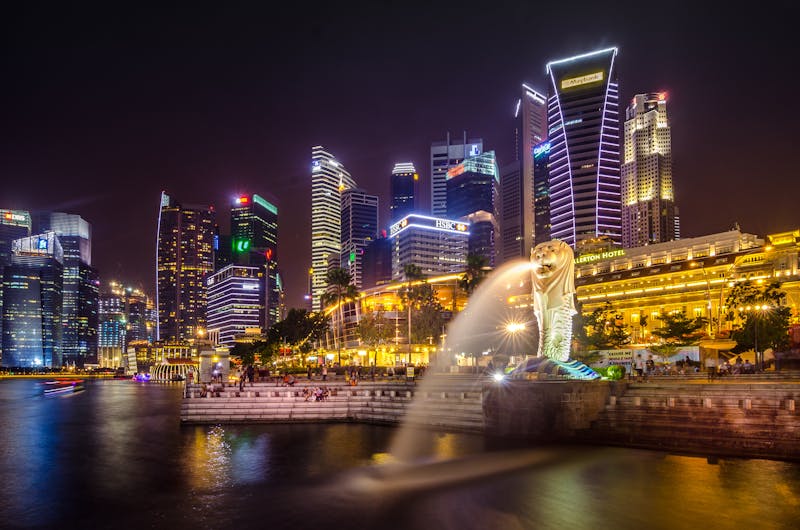
Singapore is a compact city-state, yet its attractions spread across Marina Bay, the colonial centre, Chinatown, Little India, Kampong Glam, Sentosa, and nature reserves. The MRT makes travel straightforward, although you should expect plenty of walking in constant heat and humidity. Three days cover the central districts, Gardens by the Bay, and an evening by the river; four or five allow time for museums, the zoo, beaches, or hiking. Alternate outdoor stops with air-conditioned places around midday, carrying water and rain protection. Public rules are strictly enforced: cross at designated points, do not eat on trains, and follow posted restrictions. A car is unnecessary, and grouping sights by area produces efficient, unhurried itineraries.
The port of Temasek appears in medieval regional sources, while the name Singapura, “lion city”, belongs to Malay tradition. In 1819 Stamford Raffles established a trading post on the island for the British East India Company, with the agreement of local rulers. Its position on the strait attracted Chinese, Malay, Indian, Arab, and European merchants and workers. Singapore joined the Straits Settlements and later became a Crown colony. Japanese occupation during the Second World War, followed by the British surrender, left a deep mark on its people. After achieving self-government, Singapore joined the Federation of Malaysia in 1963, but separation brought independence in 1965. Under first prime minister Lee Kuan Yew, the new state focused on its port, manufacturing, public housing, education, and foreign investment. Within decades it became a global financial and logistics hub. Districts, temples, mosques, churches, and hawker centres still reflect a society shaped by migration, while conserved shophouses and monuments stand beside continual urban transformation.
Singapore can be visited year-round: high temperatures, strong humidity, and short downpours are normal in every season. From February to April rain tends to be less persistent, although sunshine remains intense; from November to January the northeast monsoon brings wetter conditions. Always carry a light umbrella and a layer for air conditioning. Lunar New Year enlivens Chinatown and may raise prices and crowds; during the Grand Prix, parts of Marina Bay face diversions and higher hotel rates. Walk early in the morning or late afternoon. Thunderstorms can temporarily close outdoor attractions, so keep the order of visits flexible and combine gardens, museums, and covered markets within the same area.
Gardens by the Bay — free outdoor gardens, cooled conservatories, and Supertree Grove; indoor attractions require tickets. Marina Bay — panoramic walk linking the Merlion, Helix Bridge, and Esplanade. National Gallery Singapore — Southeast Asian art inside former civic buildings. Asian Civilisations Museum — collections exploring Asia's cultural exchanges. Buddha Tooth Relic Temple — major Chinatown temple; dress respectfully. Sultan Mosque — Kampong Glam landmark, accessible outside prayer times. Singapore Botanic Gardens — UNESCO site with free general entry and a separate National Orchid Garden. Fort Canning Park — historic hill with colonial remains and shaded paths. Thian Hock Keng — nineteenth-century Hokkien temple near Telok Ayer. Southern Ridges — elevated route through parks, including Henderson Waves. Check official websites for current prices and availability before visiting.
1 day: begin in the Civic District and National Gallery, cross Marina Bay, visit Gardens by the Bay, and eat at a hawker centre. 2–3 days: add Chinatown with Telok Ayer, Little India, and Kampong Glam; devote a morning to the Botanic Gardens and an evening to the Singapore River. Place conservatories or a museum in the hottest hours. 5+ days: complete Fort Canning, Tiong Bahru, and Southern Ridges, then choose Singapore Zoo, Night Safari, Bird Paradise, or Sentosa. Reserve half a day for Pulau Ubin if you want rural scenery and cycling. Organise each day around one or two MRT lines and leave room for thunderstorms. Jewel Changi fits well on arrival or before departure, beyond immigration control.
The food scene reflects Chinese, Malay, Indian, and Peranakan communities. Hawker centres are the natural starting point: order at the stall, give your table number when requested, and return trays and crockery to designated stations. Try chicken rice, fragrant rice with chicken and sauces; laksa, noodles in spiced coconut broth; char kway teow, stir-fried rice noodles; grilled satay, roti prata with curry, nasi lemak, and kaya toast. Chilli crab and black pepper crab cost more than market dishes, so confirm weight and price before ordering. Maxwell Food Centre, Chinatown Complex, Tekka Centre, Old Airport Road, and Lau Pa Sat offer broad choice, but individual stall hours vary. A basic meal is roughly S$5–10; restaurants often add service and tax to displayed prices.
Marina Bay concentrates the skyline, museums, and gardens, with expensive hotels and excellent connections. Chinatown combines temples, restored shophouses, markets, and hawker centres; it is central and lively. Little India offers South Asian shops, temples, and food, especially around Serangoon Road. Kampong Glam, between Sultan Mosque and Haji Lane, keeps Malay and Arab roots beside contemporary venues. Bugis is convenient for transport and shopping. Orchard Road favours large hotels and malls. Clarke Quay and Robertson Quay suit evenings by the river. Tiong Bahru mixes a market, residential architecture, and cafés; Sentosa works for beaches and attractions but is less convenient for exploring heritage districts.
Lunar New Year brings decorations, markets, and celebrations, particularly in Chinatown. Hari Raya Aidilfitri, tied to the Islamic calendar, animates Geylang Serai and Kampong Glam at the end of Ramadan. Vesak Day is observed in Buddhist temples; Deepavali lights Little India with arches and markets. National Day on 9 August includes ceremonies and fireworks, with controlled access around the bay. The Formula 1 Grand Prix runs annually on the Marina Bay street circuit and changes traffic, access, and hotel rates. The Singapore Food Festival showcases cooks and local traditions, while Christmas celebrations decorate Orchard Road and Gardens by the Bay. Dates for many observances vary, so check the official calendar and book ahead.
Singapore Changi Airport (SIN) is the main international gateway and one of Asia's largest hubs. Singapore Airlines typically connects Singapore with Milan Malpensa and Rome Fiumicino; other options from Italy involve one stop with European or Gulf carriers, while Scoot provides numerous regional onward flights. A nonstop journey from Italy takes roughly 12–13 hours; with a connection, allow commonly 15–20 hours overall. Fares vary sharply by season and booking time: compare baggage, meals, seat selection, and connection length, not merely the initial price. Changi has four passenger terminals linked by Skytrain or shuttle buses; Jewel sits in the public area beside Terminal 1. Visiting it in transit requires clearing immigration and meeting Singapore's entry conditions.
The MRT network and buses cover almost the entire city. With a contactless card, mobile wallet, or EZ-Link, ordinary rides cost about S$1.28–2.57 by distance; foreign cards may attract a daily fee. Always tap in and out with the same device. The Singapore Tourist Pass provides unlimited MRT, LRT, and basic bus travel for several durations. From Changi: leave station CG2 and change at Tanah Merah for the East West Line, or at Expo for the Downtown Line; central areas take about 40–60 minutes and S$2–3. Official taxis usually take around 30 minutes and cost S$25–45, plus applicable surcharges. Grab, Gojek, and other services use designated pickup areas. Walk within districts, but use the MRT for longer distances; renting a car is rarely useful.
Accommodation makes Singapore expensive, but food and transport can remain affordable. Budget: hostel bed about S$35–70, simple room S$90–150, hawker-centre meal S$5–10, and daily transport S$6–12. Mid-range: well-connected hotel S$170–300 per night, casual restaurant meal S$20–40 per person, and one or two paid attractions. Marina Bay hotels and major-event periods can easily exceed S$400. Allow roughly S$100–170 per person daily when sharing an inexpensive room, or S$220–380 with a mid-range hotel, restaurants, and admissions. Many gardens, districts, and walks are free; zoos, conservatories, and viewpoints add more. Check whether hotel and restaurant prices include taxes and service. For flights and hotels, compare flexible dates and book before holiday periods.
The currency is the Singapore dollar (SGD); cards and mobile payments are widespread, although some stalls prefer cash. English, Malay, Mandarin, and Tamil are official languages. Power sockets are type G, 230V. Tap water is safe to drink. Tipping is not customary; restaurants may already add a service charge. Singapore is generally safe, but protect belongings in crowds and respect laws and restrictions, including rules on smoking, littering, and food on transport. Italian and many EU passport holders normally need no visa for short visits, but require adequate passport validity and a free SG Arrival Card within the three days before arrival. Always verify with ICA. Tourist SIMs and eSIMs are available; EU roaming does not apply.
This site uses third-party cookies — Google Analytics for visit statistics and functional cookies for the flight search engine. By clicking "Accept" you consent to the use of cookies. Cookie policy